
New Technologies in Museums — A 2026 Overview
July 25, 2026
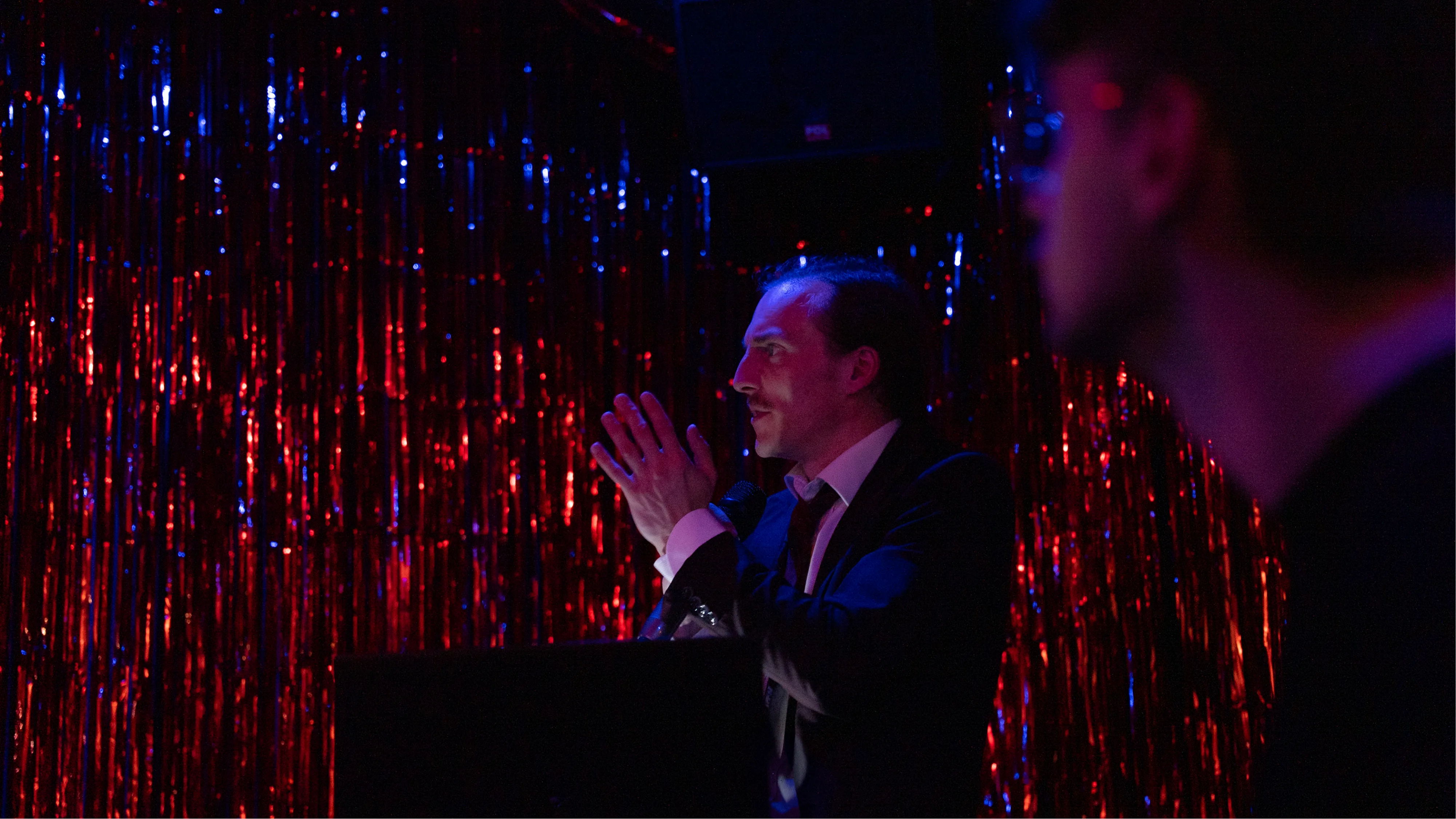
Museums no longer compete only with each other for a visitor's attention — they compete with the phone in that visitor's pocket. That's why more and more institutions are turning to technologies that turn visiting from passive viewing into active experience. Here's a short overview of four approaches that actually work, and when each one makes sense.
Projection Mapping and Video Mapping in an Exhibition
Projection precisely fitted to an object's real geometry — a wall, a façade, a piece of the exhibition — brings an artifact to life without any physical intervention in its structure. That makes it especially suited to historic objects, where installing extra hardware is often impossible. See what projection mapping is and our piece on how to revive a museum exhibition with this technique.
XR — VR and AR in Museum Practice
Virtual reality drops the visitor into a fully designed space where they're an active participant, not an observer. Augmented reality works differently — it overlays a digital layer on what the visitor already sees, usually through their own phone. The two technologies carry a different entry budget and different constraints — we cover this in more depth in XR in culture and augmented reality in museums.
Gamification and App-Free Quizzes
Scoring, competition and instant feedback engage visitors more deeply than a wall label — provided the hardware actually works. Systems built on dedicated consoles, rather than an app installed on the visitor's own phone, hold up better inside historic buildings with weak Wi-Fi and in school groups where not everyone owns a smartphone. More in gamification in museums through a quiz, ESP32 — a quiz without an app, and on how a computer game differs from gamification.
Interactive Scenography for Temporary Exhibitions
A temporary exhibition doesn't have to end at glass cases and backlit panels — interactive scenography that responds to a visitor's presence and movement can build a mood that a static display simply can't reach. See the definition of interactive scenography.
How to Choose a Technology for Your Budget and Exhibition Type
- Permanent exhibition, larger budget, long horizon — projection mapping or interactive scenography as a lasting investment in the character of the place.
- Temporary exhibition, limited time and budget — gamification on dedicated consoles or a short VR experience, see VR or quiz for a temporary exhibition.
- Goal: attendance and new audiences — combining XR and gamification usually outperforms a single solution on its own, see museum attendance and technology.
Each of these paths is its own design decision, not an off-the-shelf product. If you're weighing which one fits your institution, get in touch — we're happy to advise based on your actual space, budget and audience. See also our services: projection mapping, XR and gamification.