
What Is Projection Mapping
December 25, 2025
What Is Mapping?
Mapping, full name projection mapping (also known as 3D mapping or video mapping), is a projection technique in which the image is precisely matched to the real shape of a surface — a building, a set piece, an object — rather than displayed on a flat, rectangular screen.
How Does Projection Mapping Work?
The process starts with precisely capturing the geometry of the object — through a 3D scan, an architectural model, or precise measurement. Based on that, an animation is designed that "knows" where every edge, recess, or surface irregularity is at any given moment. Specialized mapping software then allows that animation to be matched (mapped) to a specific projector and a specific surface, so the image aligns perfectly with the physical form of the object.
As a result, the same flat animation can, for example, make a building's wall appear to crumble, make a theatrical set piece appear to change texture, or make a sculpture appear to change color and shape — all without any physical intervention on the object itself.
Where Is Projection Mapping Used?
- Building facades — including historic buildings, since projection requires no installation work or intervention in the structure (see: is mapping safe for a historic facade).
- Theatrical scenography — as a visual layer integrated with the physical set and lighting, not a separate screen.
- Public and natural spaces — site-specific installations in which the object itself becomes the screen.
An Example from Our Practice
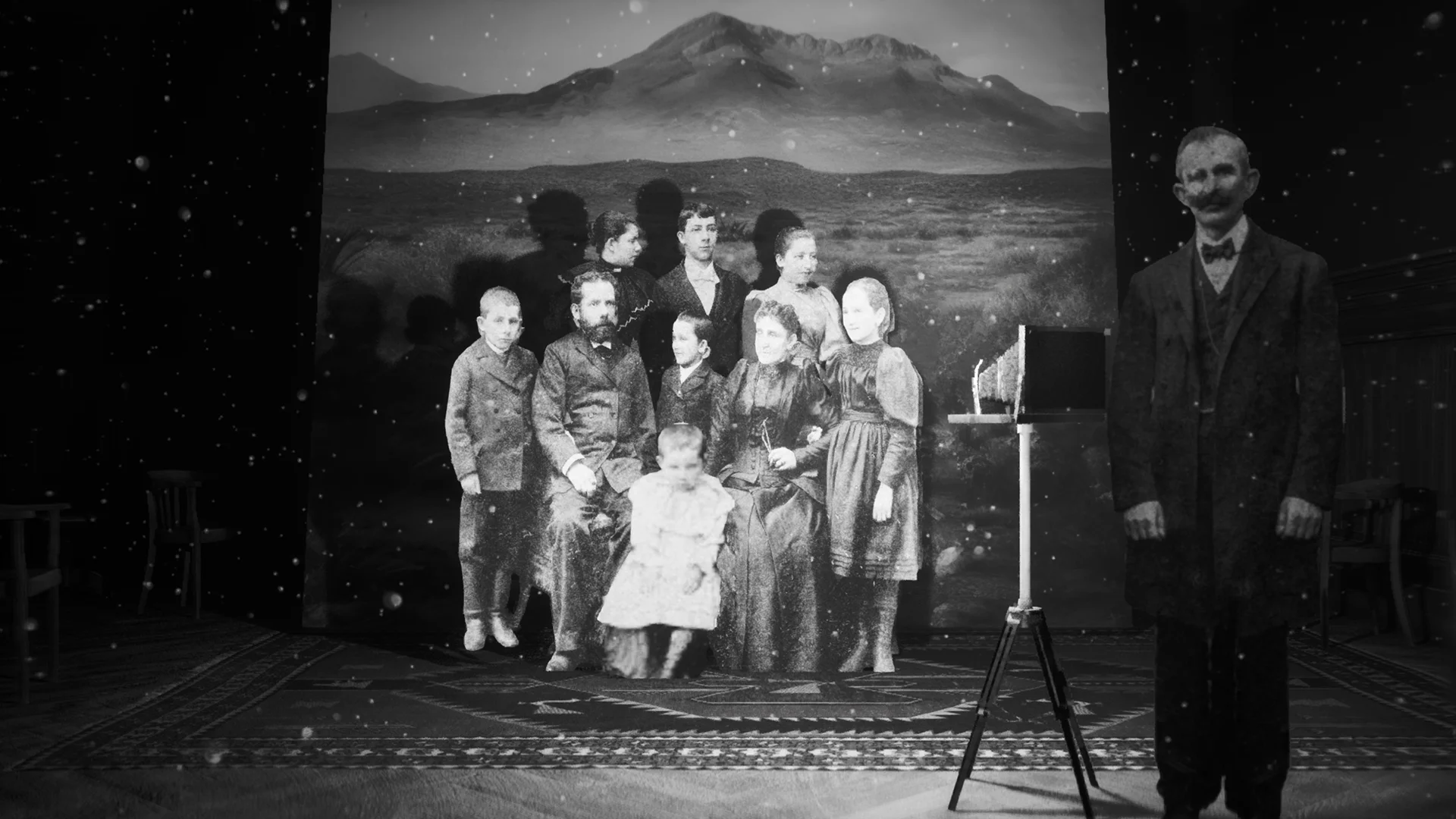
"Rural Mapping" is a series of projection mapping installations staged in spaces of the Polish countryside — barns, cottage interiors, farmyards — where the image literally returns to the place it came from: the starting point of every realization is a 3D scan of the object, which becomes the basis for the final projection.
A second example, "Romantic Chopin" for the Art Box Experience Immersive Gallery, shows mapping on an entirely different scale — an over-10-minute, painterly animation about the life of Frédéric Chopin designed for the architecture of the gallery hall, awarded a Webby Award in 2026.
We describe the full production process — from scanning the object to the premiere — step by step in the article "Projection Mapping Step by Step".
Check out our projection mapping service if you're considering a similar production.
See more examples in 3D mapping on a building — what it looks like in practice.
FAQ
Frequently asked questions
What is mapping?
- Mapping — full name projection mapping, also called 3D mapping or video mapping — is a projection technique in which the image is precisely matched to the real shape of a surface — a building, a set piece, an object — rather than displayed on a flat, rectangular screen.
What is building projection mapping?
- Building projection mapping applies the same technique to a building's facade: the animation is designed against a 3D scan or precise measurement of the structure, so the projected image aligns with every window, cornice and irregularity of the wall instead of just being cast onto it.
How is projection mapping different from a normal projection?
- A normal projection assumes a flat, rectangular screen. Mapping reverses that — the animation is designed for the object's specific geometry, so the image lines up exactly with every edge, recess and irregularity of the form, instead of simply being cast on top of it.