
VR or Interactive Quiz – How to Choose the Right Educational Technology for a Temporary Exhibition
April 20, 2026
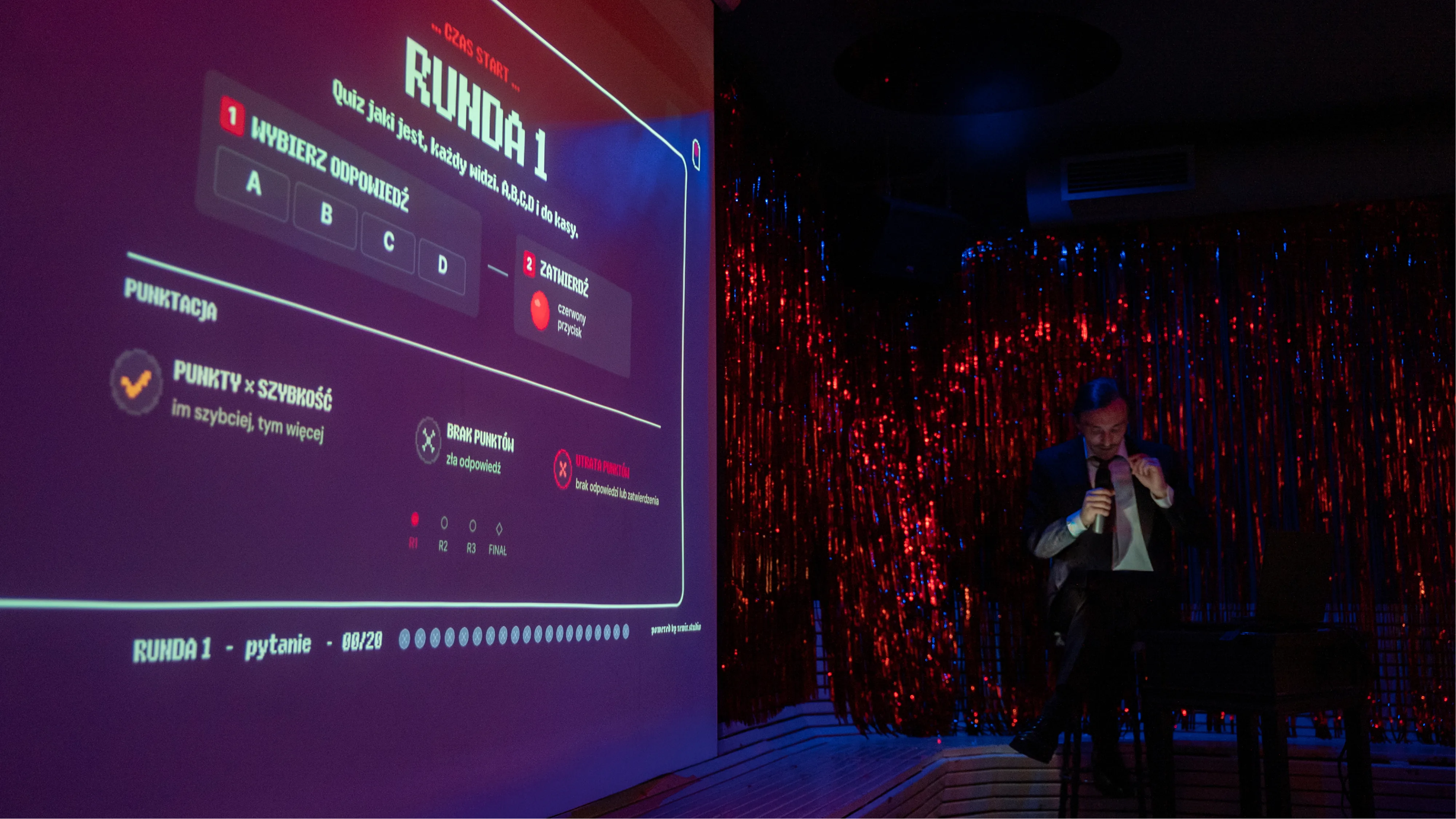
A temporary exhibition gives a cultural institution a chance to experiment in ways a permanent exhibition doesn't allow — but it also raises the question of which educational technology is worth investing in for the run of the show. VR and an interactive group quiz are the two most commonly considered directions, but they answer very different needs.
When VR is the right choice
Virtual reality makes sense when the exhibition's subject is something physically inaccessible — an interior that no longer exists, a place too remote or too dangerous to visit, a process happening at a scale impossible to observe directly. VR delivers a sense of presence that no other technology can replicate — that's its unique value, and we cover it in more depth in "VR in Museums".
The cost of that value is limited throughput: one person at a time, a limited number of cycles per day, and the need for supervision and equipment upkeep.
When an interactive quiz is the better choice
If the goal of the temporary exhibition is to convey a set of facts or historical or scientific context to a large number of visitors, including school groups, a group format built around a quiz and shared competition works better. There's none of the throughput limit that defines VR, and the social effect of competition strengthens content retention, as we discussed in our article on gamification in museums. That's exactly the principle behind our Rewanż system, which we've also adapted for museum education contexts.
Decision criteria in practice
When making the decision, it's worth considering three questions:
- How many people are expected to use the experience each day? High traffic, including school groups, argues for a group format.
- Does the exhibition's subject call for a sense of "being there," or for delivering specific information? The former points to VR, the latter to a quiz format.
- What operating budget is available for the run of the exhibition? VR requires ongoing technical staffing of the station; a quiz format, once deployed, runs largely self-sufficiently, with one facilitator per group.
A hybrid solution
Many institutions don't have to choose one over the other — a well-designed temporary exhibition can include a short, intimate VR moment as the high point of an individual experience, alongside a group quiz as an educational element accompanying organised group tours. The balance between them should come from the visitor profile, not from whatever technology happens to be fashionable.
If you're planning a temporary exhibition and wondering which approach — or what combination of the two — fits your subject, let's talk about your specific visitor profile.
See our gamification and museum technology offer, which covers both approaches.