
ESP32 Technology and Buzzers in Education – How a Quiz Works Without a Phone App
March 12, 2026
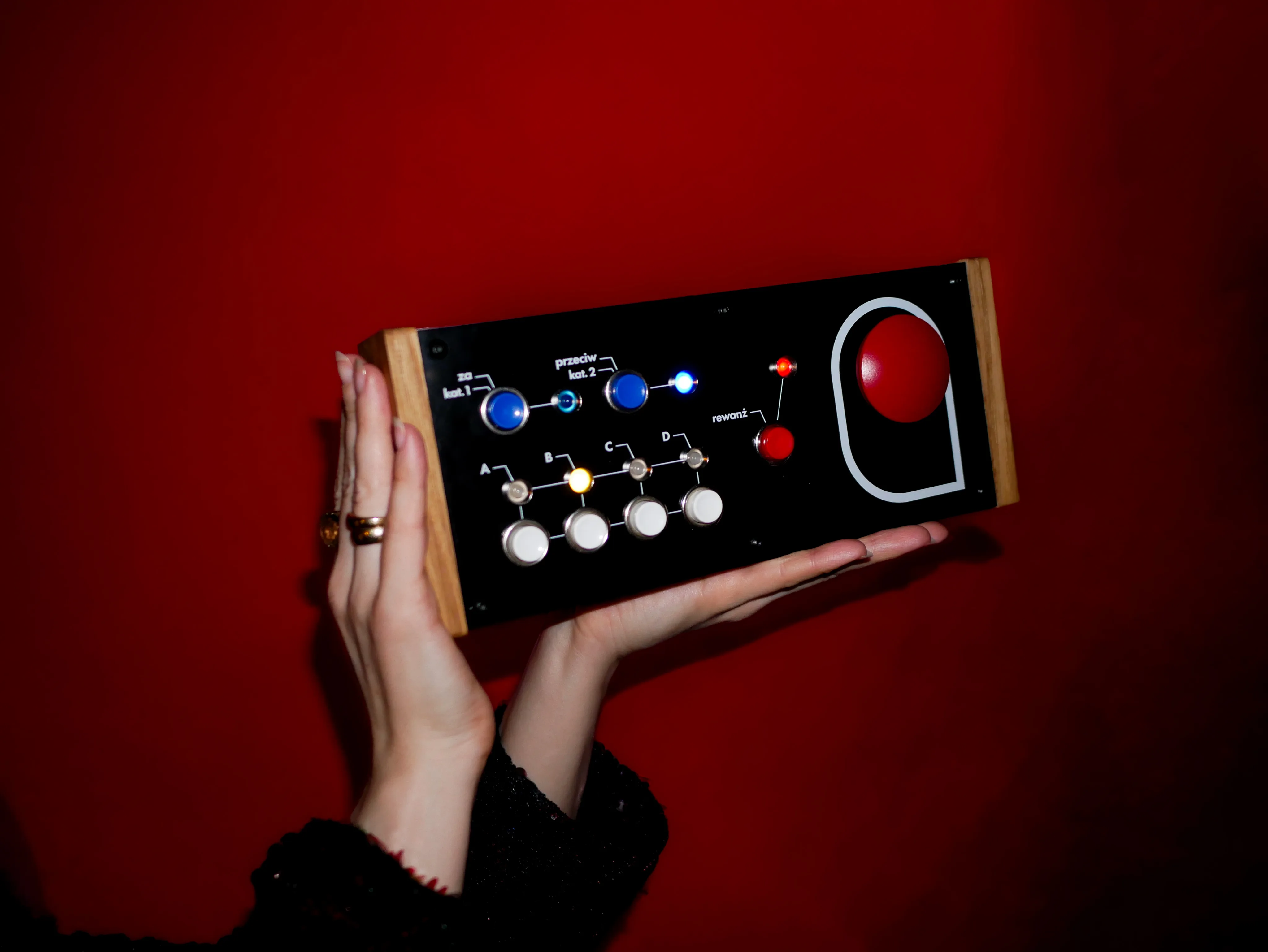
Among cultural institutions considering an interactive quiz, one question comes up again and again: wouldn't it be simpler to do it through an app on participants' phones? The technical answer is unambiguous — in the context of school and museum groups, dedicated physical answer consoles have a significant edge over smartphone-based solutions.
The Problem with the "Phone App" Model
A model based on participants' own phones assumes several things that fail in practice in a museum setting: stable Wi-Fi or mobile data inside a building with thick, often historic walls; charged batteries for every participant; no issues installing the app within the limited time of a visit; and — in the case of children and teenagers — having a smartphone of their own at all.
Each of these conditions, if it fails for even one person in the group, creates a stoppage that breaks the pace of an event built up until that point.
How a System Based on Dedicated Consoles Works
A system built on ESP32 microcontrollers communicating wirelessly (via the ESP-NOW protocol between consoles, and then over a local network with the central system) eliminates most of these problems. The consoles are self-contained — battery-powered, ready to use the moment they're switched on, with no login, installation, or pairing with a participant's phone.
From the participant's perspective, using it comes down to pressing a button — which matters for mixed-age groups, where not every participant feels comfortable operating an app.
Why Reliability Matters More Than at a Corporate Event
At a corporate event, a single console failing is an inconvenience. In an educational context, where the time of a school trip is tightly limited and is often the group's only visit of the year, any technical downtime directly eats into time meant for education. That's why systems like this are built with guaranteed signal delivery and automatic detection of a lost connection to a console — so the host knows immediately that a given console needs attention, before the whole group notices.
What This Means for an Institution Planning a Rollout
Choosing hardware technology isn't purely a technical decision — it's a decision about how many things can go wrong during an actual school group visit. Dedicated, self-contained consoles minimize that number of variables, which in museum practice matters more than the flexibility of a smartphone-based solution.
This exact console system powers Rewanż, including its version adapted for museum education — and we write about how to build a good question base for it to run on in the article "How to Build a Museum Quiz".
See our gamification and museum technology offer if you're planning a similar deployment.