
A Computer Game as an Education Tool in Museums
August 8, 2026
The word "gamification" gets overused — add scoring to an existing tour and you can already call it a game. A real computer game is something else: a standalone program, with its own engine, logic, and interface, designed from the ground up as a game, not a points system bolted on afterward.
How Does a Computer Game Differ from Gamification?
Gamification is a mechanic — points, levels, competition — layered on top of an existing experience, like touring an exhibition. A computer game is a standalone program: it has an engine, rules, an interface, and gameplay designed from scratch. Our system Rewanż is the latter — an application built in Unreal Engine 5, paired with physical player consoles running on ESP32 microcontrollers, not a layer added on top of an existing exhibition.
A Computer Game for Museums — What It Looks Like in Practice
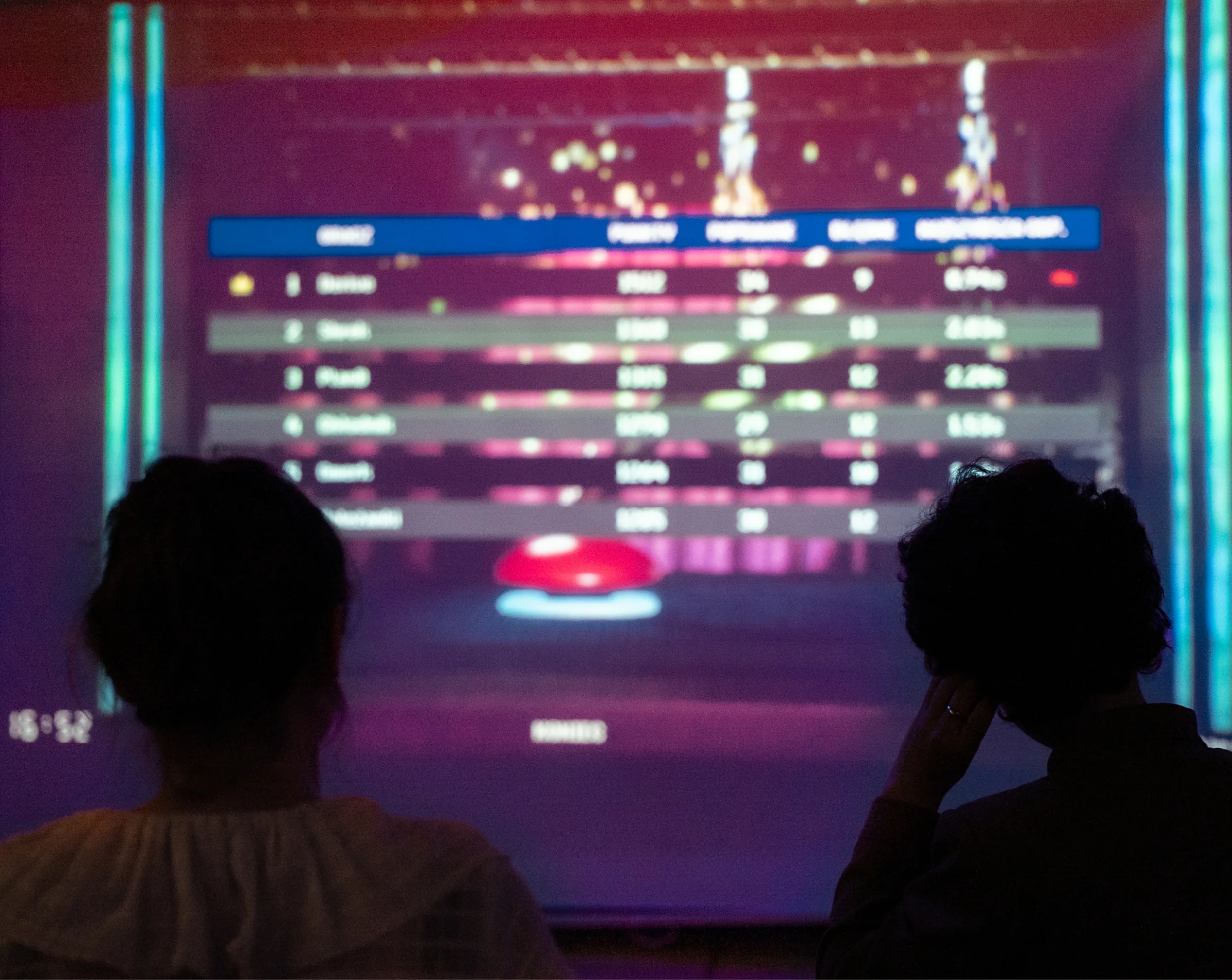
"Rewanż" plays like a real TV game show: players compete on stage, in real time, controlling their own consoles, while the Unreal Engine 5 application runs the entire show — questions, scoring, the finale. The same game engine works both as a mobile game show for events and, in its adapted form, as a museum-education format for organised groups — more in the Rewanż museum-education case study.
A Game as an Education Tool — Why It Works
A computer game offers something a traditional lesson can't: an immediate decision–feedback–consequence loop. A participant doesn't read about a topic, they make a decision inside the game and see its effect right away — a point, a spot on the leaderboard, the host's reaction. It's exactly that loop, familiar from game design, that makes knowledge stick longer than a lecture ever could. We write more about this in gamification in education.
A Game and New Media in Museums — The Bigger Picture
A computer game is one of several new media museums are turning to today, alongside projection mapping and XR. What they share is one thing: they turn a visitor from an observer into a participant. For a full overview of these approaches, and when each one makes sense, see our overview of new technologies in museums and our museums and cultural institutions page.
If you're considering a computer game as part of your institution's educational offer, get in touch — we're happy to walk you through how this works in practice using Rewanż as an example. See also our gamification and museum technology service.