
Interactive Scenography – Definition and Examples
May 21, 2026
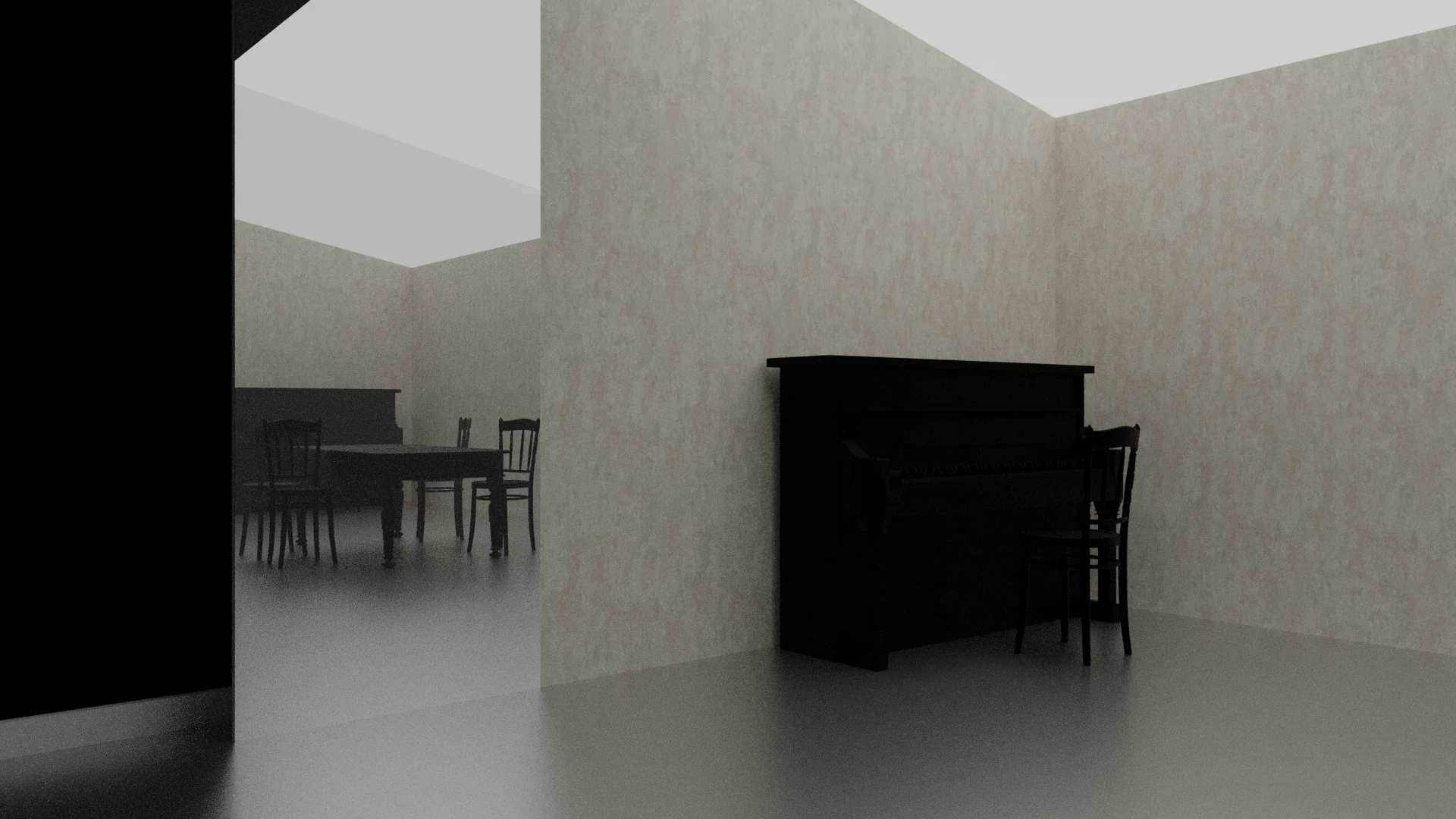
Interactive scenography is an approach to designing stage space in which set elements, light, or projection respond to what's happening on stage — a performer's movement, sound, a shift in the scene's mood — instead of remaining an unchanging backdrop from the first minute of the performance to the last.
How it differs from classical scenography
Classical scenography defines the space once, at the set-building stage — its appearance doesn't change over the course of the performance beyond scene changes. Interactive scenography adds a layer that can change in real time: projection responding to an actor's position, light synchronized with sound, mechanical elements controlled from the same desk alongside the multimedia.
That calls for a different design approach from the very start — the space and its digital layer have to be designed together, not added on sequentially.
Examples from practice
In "Wiera Gran", the scenography, lighting, and visual projections were designed as one integrated visual system, drawing focus to the performer and reinforcing a sense of presence within the confined, intimate stage space of the Polski Theatre, Poznań.
In "Dus buch fyn Gan Ejdn" / "The Book of Paradise", interactivity shows up differently — shifting digital environments and symbolic imagery change dynamically as the performance unfolds, extending the physical stage space of the Jewish Theatre, Warsaw into a digital dimension.
How to design interactive scenography well
The key is controlling all the responsive elements — light, projection, mechanics — from a single system, so that reactions stay synchronized rather than depending on the reflexes of several operators working separately. More on this mechanism in our article on DMX in theatrical scenography.
Before building the physical set, it's also worth seeing how the designed interaction will actually work in practice — we write about prototyping this kind of solution in VR in the article "VR Preview".
See how we design scenography that combines architecture, light and technology.
See also what technical systems a set like this is actually made of: multimedia scenography — what it's made of.