
Immersive Theatrical Scenography – What It Means and When It Works
May 21, 2026
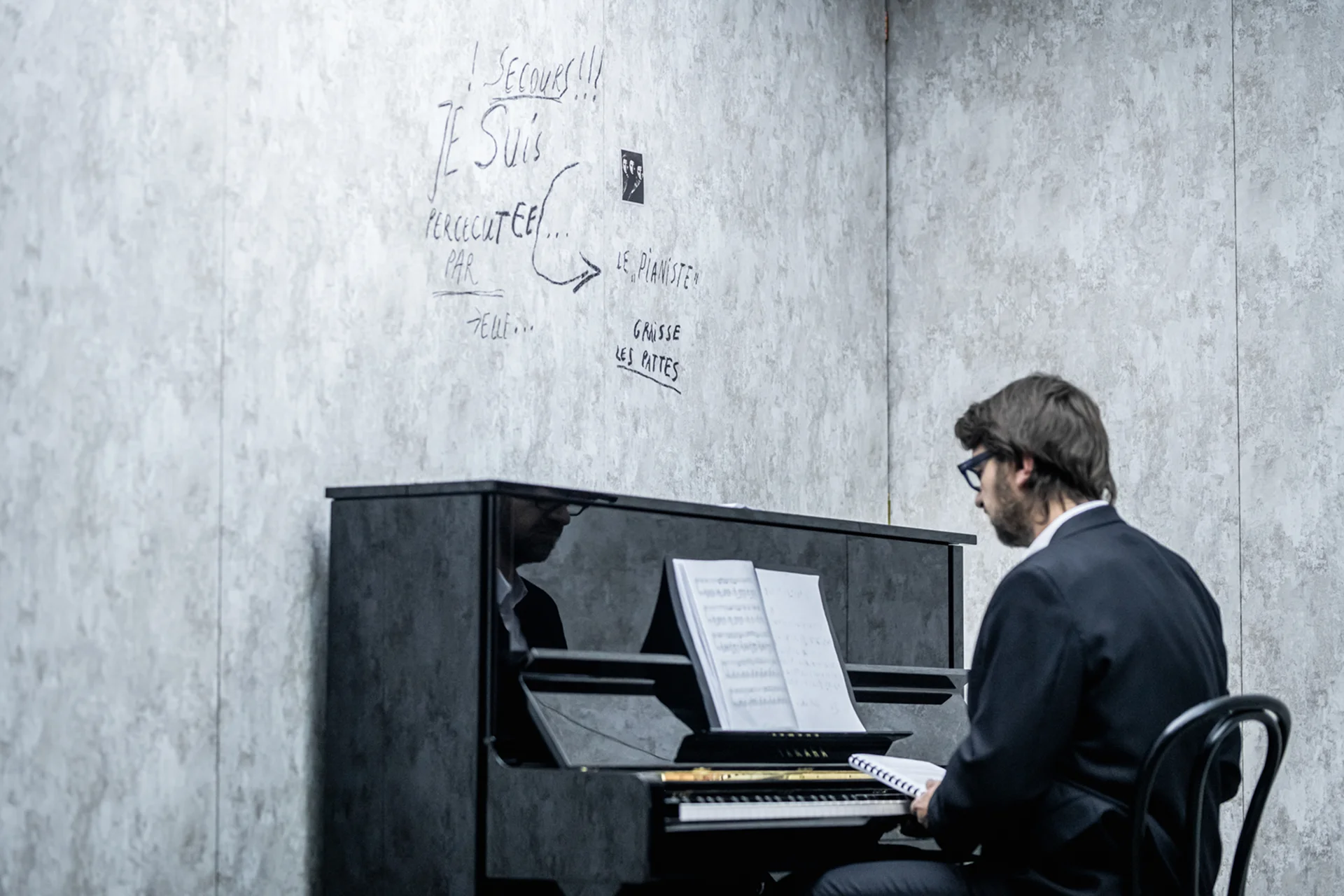
The term "immersive scenography" gets overused — often it just means a projector aimed at the back curtain. Truly immersive scenography is something else: a situation where image, light, and the physical stage construction were designed together, as a single system, rather than bolted onto one another at dress rehearsal.
The Difference Between a Decoration and a System
Classic theatrical scenography defines space physically — through shape, material, and the arrangement of elements. Immersive scenography adds a layer on top that can change in real time: projection reacting to the stage action, light integrated with multimedia, spatial sound that follows the performer.
The key question isn't "should we add projection," but "should space and image be designed together from the very first sketch." That second path genuinely changes how the director and set designer work — because the physical limitations of the space stop being the only point of reference.
When It Truly Strengthens the Narrative
Immersive scenography works best where the physical space has limitations that can't be built around. For "Wiera Gran" at Polski Theatre, Poznań, the starting point was the theatre's smallest stage — reviewer Mike Urbaniak jokingly called it a "broom closet." An integrated layer of visuals, light, and scenography wrung a sense of presence and focus out of that micro-space that the physical construction alone couldn't have delivered.
Similarly, in "Songs of the Ghetto" for the Jewish Theatre, Warsaw — projections built from archival material didn't illustrate the performance from the outside; they built a subtle narrative layer accompanying the live action, reinforcing the presence of testimony without overpowering the actors.
A third example, "Der Szturem. Cwiszyn" for the same theatre, shows yet another case from the same list: a photogrammetric 3D reconstruction of long-gone tenement buildings from the Warsaw Ghetto becomes the only possible way to show a space that can no longer be physically recreated.
A fourth example, "The Kindly Ones" for the Śląski Theatre, goes a step further — the stage holograms there build not a space, but the protagonist's inner, nightmarish state. That's material no physical set could ever show, since by definition it only exists inside his head.
Immersive scenography works when:
- the physical space has constraints (size, construction budget, no possibility of rebuilding),
- the narrative requires a shift in the stage's mood without changing the set,
- the story is built on material that can't be shown physically (archive footage, memory, abstraction).
When It's Unnecessary
Not every production needs a digital layer. If the physical set fully realizes the director's vision, and projection would only be pure decoration — it's better to leave the stage clean. Immersive scenography added without integrating it into the lighting design and stage action quickly starts to look like a music-video backdrop, not an element of the drama.
We write more about the tool itself, which lets you see that integration of image and space before opening night, in our article on prototyping scenography in VR.
If you're designing a production where the constraints of the stage space are a real problem — get in touch at the concept stage, before the scope of the set build is decided.
More on our approach on the scenography and spatial design page.