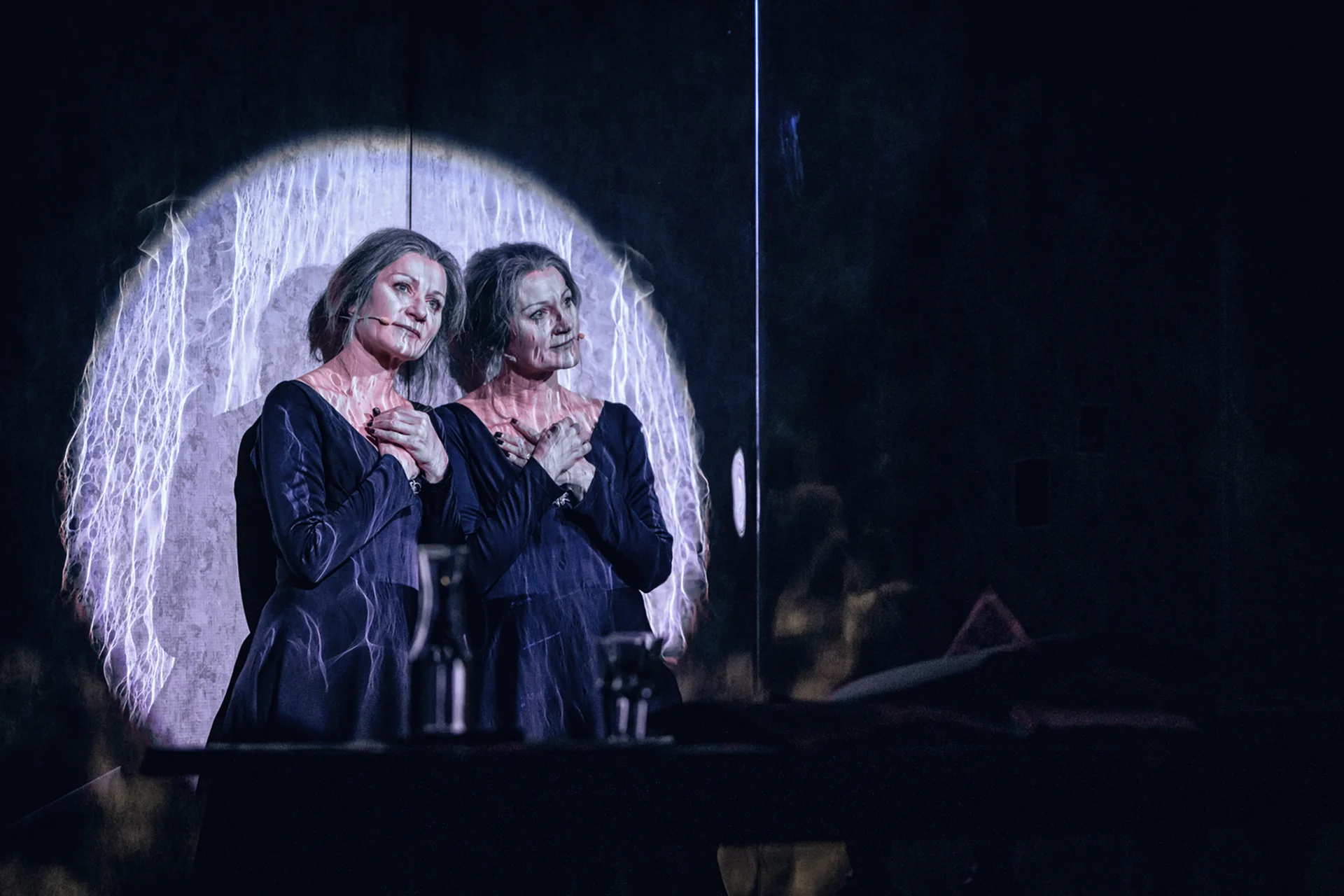
An audience member sees one coherent picture — a set that feels alive, that reacts, that changes with the action. Behind that picture usually sit several independent technical systems that have to run in perfect sync. We cover the concept itself in interactive scenography — definition; here we focus on what it's actually made of.
Projection or LED Wall — The First Choice
The first technical decision is the image carrier: a projector cast onto the physical set, or an LED screen built into the set's structure. Each option carries different spatial constraints and a different budget — we compare them in UST projector or LED wall in a small space.
Controlling Light and Effects — DMX
Stage lighting, special effects and sometimes the projection itself all need to run from a single console, synchronised frame-for-frame with the performance. DMX is the protocol that makes that possible — we cover it in DMX in theatrical scenography.
Real-Time Rendering
More and more often, what's shown on stage isn't a finished recording but rendered live — which lets it react to what's happening on stage at that exact moment, rather than just playing back a fixed sequence. More in real-time rendering and Unreal Engine in scenography.
VR Previsualisation Before Construction
Before any of the above ever reaches the stage physically, at rewir.studio we test the spatial layout in 1:1-scale VR previsualisation — the client can walk into the designed space and judge proportions and audience flow before a single piece of the set exists. This minimises the risk of costly changes once construction has started.
How It All Comes Together as One Set
In "Wiera Gran", all of these elements — projection, lighting, archival material, physical space — work as a single system, not a set of separate effects layered on top of a conventional set. It's that approach, not any single technology, that decides whether multimedia scenography reads as coherent or as a pile of gadgets.
If you're planning a production or exhibition that needs this approach, see our scenography service or get in touch.