
What Is Immersive Narrative
February 15, 2026
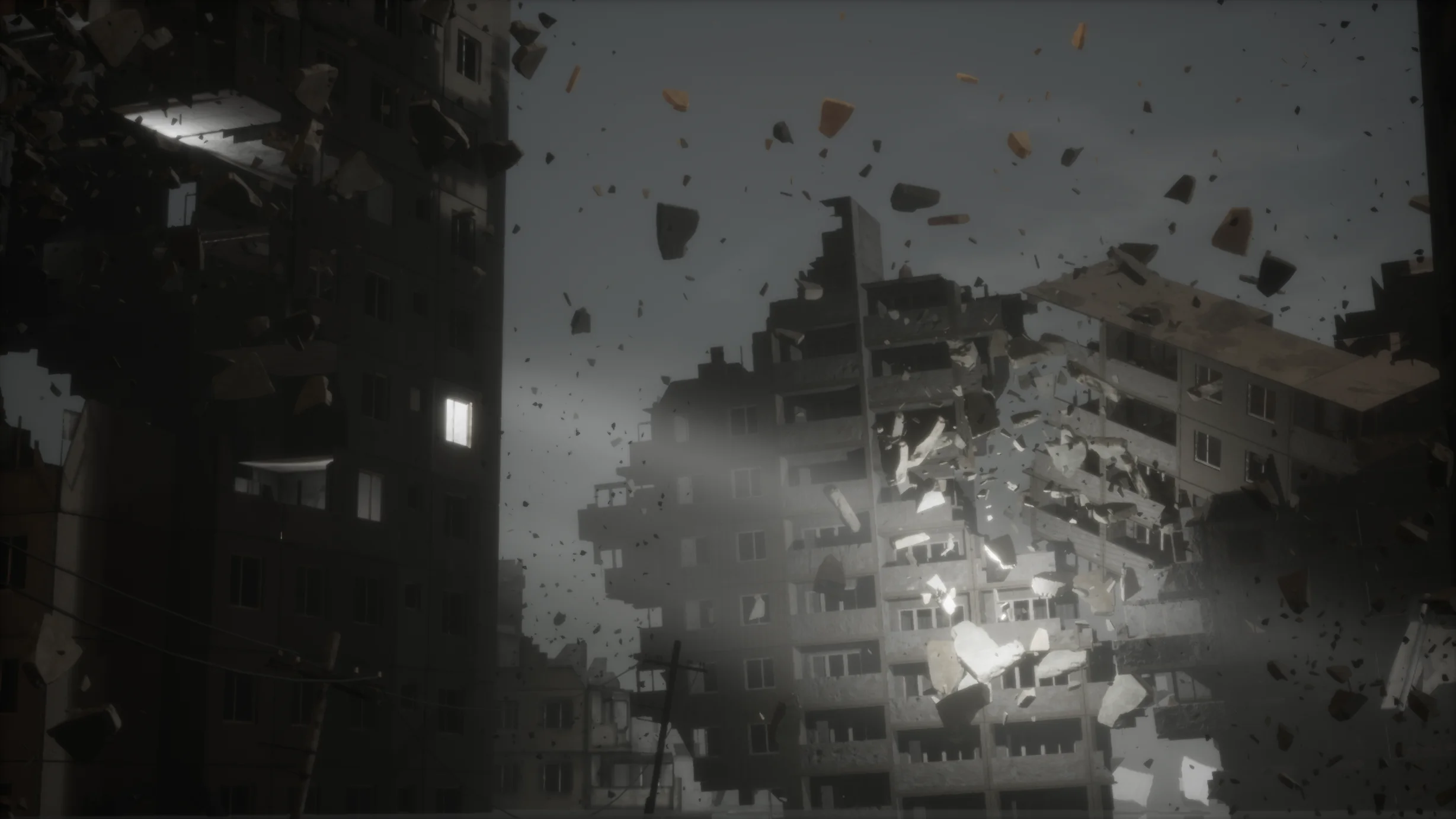
Immersive narrative is a form of storytelling in which the audience stops being a passive viewer and becomes an active participant — moving through the space of the story, making decisions, experiencing time and scale differently than when watching a film or reading a book. It's the difference between "watching a story" and "being inside one."
Why It Works Differently from Classic Narrative
Classic media — film, theatre with an audience separated from the stage, books — guide the viewer along a single, fixed path of attention. Immersive narrative scatters that path across space: the audience decides for themselves where to look, at what pace to move, what to linger on. The story has to be designed to work regardless of the order in which the audience discovers its elements — a fundamentally different writing task than crafting linear dialogue or a film script.
Three Approaches from Our Practice
"Simple Songs About Death" builds an immersive narrative around the myth of Orpheus and Eurydice — the user moves through a sequence of interconnected symbolic spaces, with movement, sound, and environment building a story about memory and transience without a single line of dialogue. The project has been shown at, among others, the DOX Centre for Contemporary Art in Prague and the 64th Kraków Film Festival.
"Promyk VR" represents a different approach — environmental storytelling aimed at the youngest audiences, in which the story of Promyk the Sun introduces environmental themes through direct experience rather than a lecture. Produced in collaboration with Pinokio Models as part of Poland's National Recovery Plan for culture.
"Romantic Chopin" is a third approach — an immersive, over-10-minute animation guiding the viewer through the emotional and artistic turning points in the composer's life, synchronized with the music and architecture of the Art Box Experience Immersive Gallery. Its painterly, oil-textured imagery, rather than the typical aesthetics of digital animation, builds a different kind of immersion than a symbolic VR environment — closer to the experience of a painting come to life than to exploring a space.
Where Immersive Narrative Works Best
This format works strongest where a subject is hard to convey directly — memory, loss, emotional relationships, complex educational processes. We write more about applications in cultural institutions in the article "XR in Culture".
See how we design XR experiences from first sketch to deployment.
Immersive narrative is a storytelling layer — see also how it differs from the immersive exhibition format as a whole.