
VR in Museums – Is It Worth Investing in Headsets, or in a Group Experience?
May 31, 2026
Virtual reality has been part of conversations about the future of museums for years. But the problem is a practical one: VR headsets are expensive, fragile, need disinfecting between users, and — most importantly — are inherently individual by design. Before a museum invests in a fleet of headsets, it's worth asking whether that's really the best form of immersive technology for the institution in question.
The individual model: strengths and weaknesses
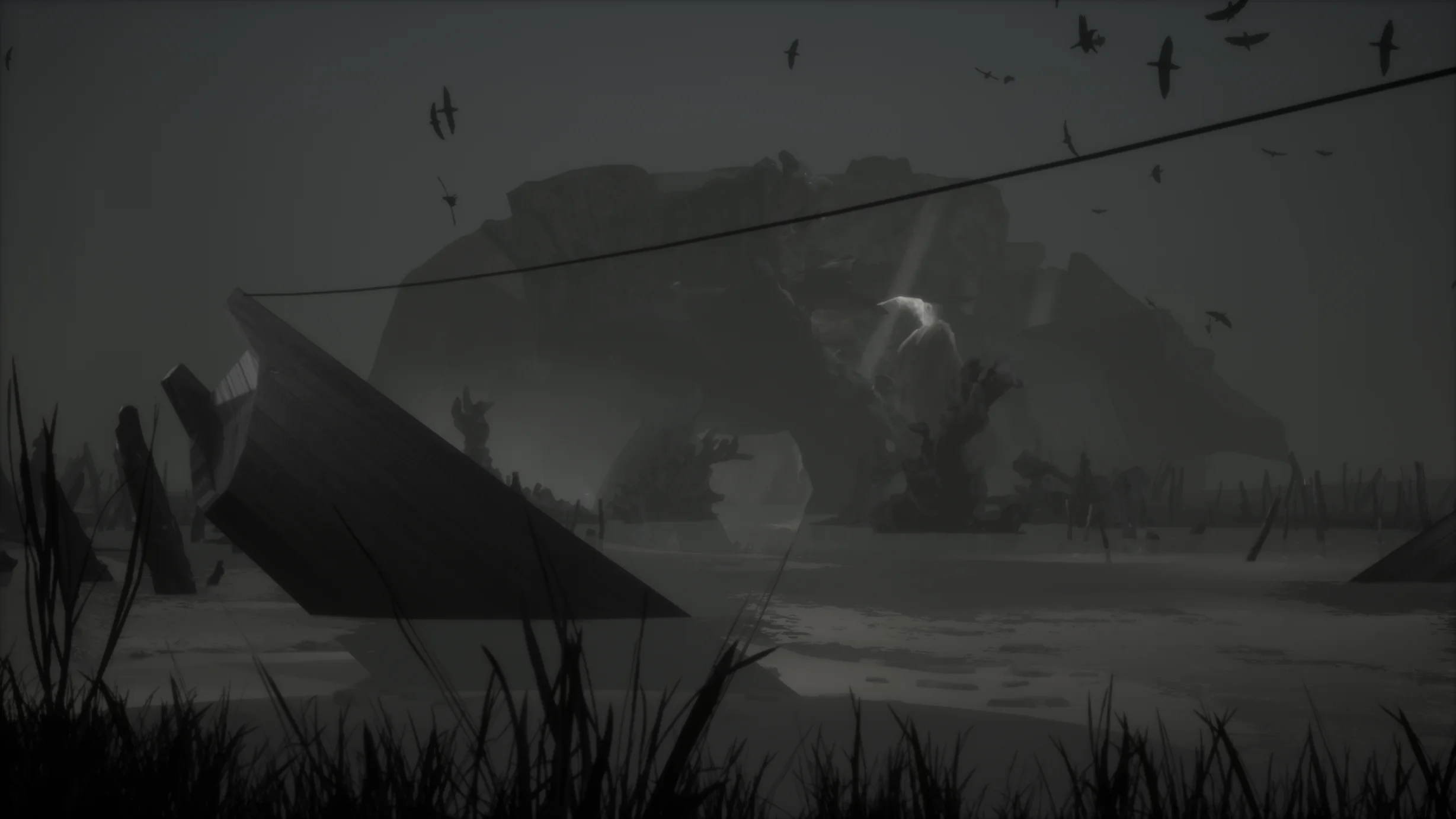
VR headsets deliver something no other technology can — a full sense of presence in another space. It's an excellent solution for reconstructing places that are physically inaccessible: the interiors of monuments that no longer exist, historical events, microscopic or cosmic scales. Our own experience, "Simple Songs About Death" — shown, among other places, at the DOX Centre for Contemporary Art in Prague — shows just how powerful that sense of presence is for subjects that can't be shown through a physical exhibit.
The problem shows up in logistics. A VR station serves one person at a time, needs supervision, has a limited number of daily cycles, and requires ongoing investment in equipment upkeep. For an exhibition visited by 30-strong school classes, that inevitably means queues and frustration.
The group model: where the advantage lies
The alternative is group immersion — a large screen, projection, or mapping, combined with interactivity operated jointly by the group, for example through quiz-style systems with answer consoles. Instead of one person in a headset, the whole group takes part in the same experience at the same time, seeing each other's reactions and competing or collaborating in real time.
This model solves the throughput problem — there's no "one person at a time" limit — and reinforces the social effect that, as we wrote in our article on gamification in museums, is key to content retention.
Which approach to choose
The answer depends on the exhibition's goal and the visitor profile:
- Individual VR makes sense for intimate exhibitions, where a personal, contemplative experience is what matters — reconstructing an interior, a journey through time, simulating an inaccessible place.
- The group format works well where the priority is throughput, working with school and corporate groups, and building the atmosphere of an event rather than just a single experience.
Many institutions run both approaches in parallel — VR as a special attraction for a temporary exhibition, the group format as a permanent part of the educational programme. We go into more detail on how to choose the right solution for a specific situation in our article "VR or Interactive Quiz — How to Choose the Right Technology for a Temporary Exhibition".
See our XR experiences offer for museums and galleries.