
UST vs LED Wall – How to Choose the Right Projection Technology for a Small Space
March 10, 2026
The smaller the space, the less room there is for error when choosing a projection technology. In a room covering a few dozen square metres, the difference between a UST projector and an LED wall isn't a matter of taste — it's a different mounting distance, a different budget, and different long-term durability.
How the two technologies differ
A UST (Ultra Short Throw) projector throws a large image from a very short distance — often just a few dozen centimetres from the projection surface. This solves the fundamental problem of small rooms: there's no space for a traditional projector throw of several metres. The trade-off is sensitivity to ambient light and lower brightness compared to a self-illuminating surface.
An LED wall is a modular, self-illuminating surface — it doesn't need any throw distance and performs well under full room lighting, but its cost scales directly with surface area, and installation requires a permanent support structure.
How Do You Choose Between Projection and an LED Wall in Scenography?
Projection works well on large, irregular surfaces and at a lower budget, but needs controlled ambient light. An LED wall gives higher brightness and works in full lighting, but costs more and is limited to flat modules. The choice depends on the stage's shape, the budget, and the event's lighting conditions.
| Projection (UST) | LED Wall | |
|---|---|---|
| Surface | any shape, mapping | flat, modular |
| Ambient light | must be controlled | works in full light |
| Cost | lower | scales with surface area |
| Installation | no permanent structure | needs a support structure |
How to choose correctly
The decision depends on three factors, not one:
- Control over light in the room. If the space can be darkened (a theatre, a screening room, a blackbox), UST usually wins on cost. If the room has full daylight (a foyer, reception, event space), an LED wall is the safer choice.
- The nature of the installation. A temporary setup (a one-off event, a show running for a few weeks) rarely justifies the cost of an LED wall. A permanent installation, running for months or years, amortises that cost differently.
- Surface geometry. UST projection handles irregular set shapes beautifully thanks to mapping — an LED wall is always flat and modular, which limits its use to classic screen formats.
From our experience
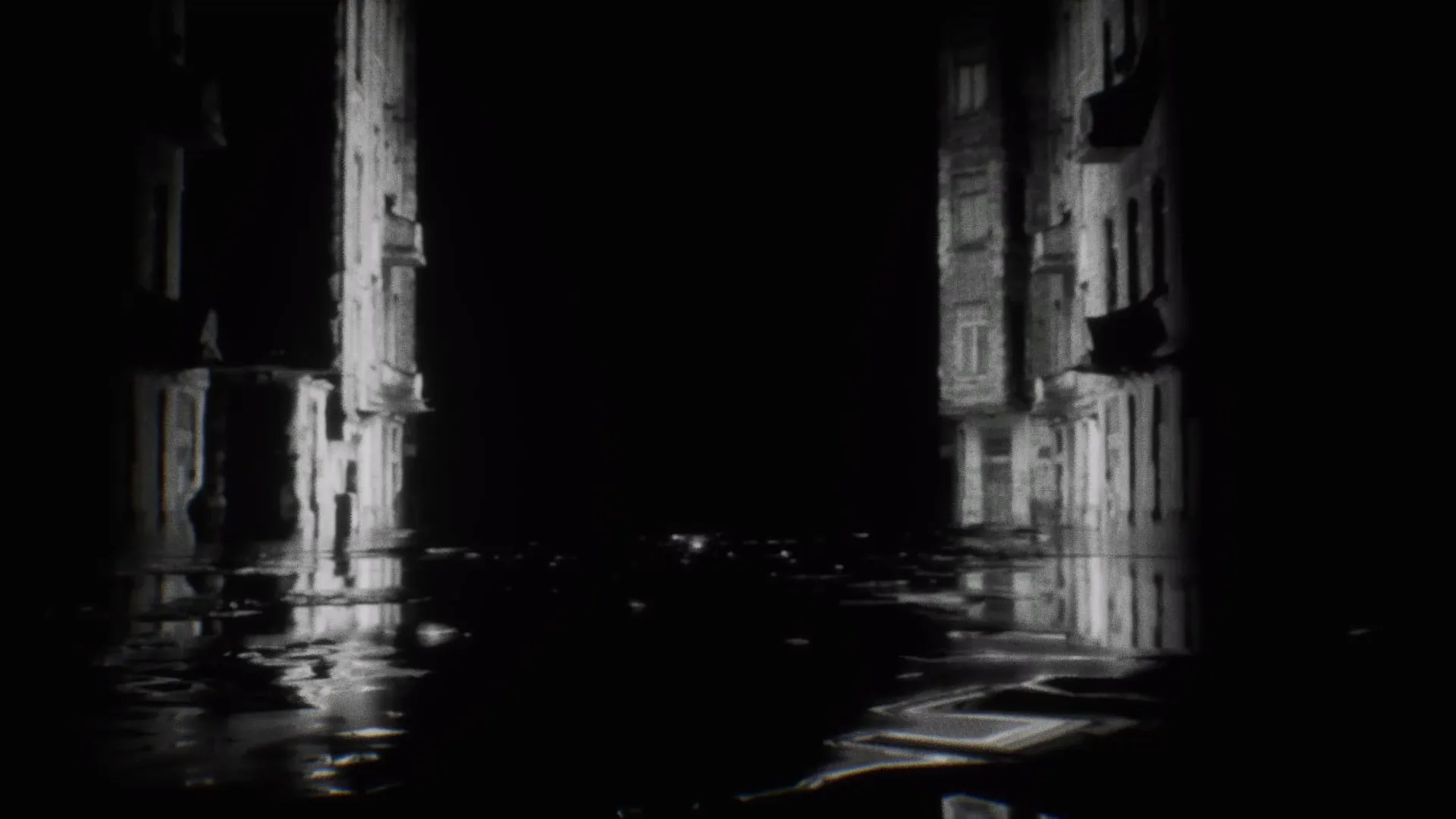
On "Wiera Gran" for the Polski Theatre, Poznań, our starting point was one of the smallest stages in Poland — a constraint that in many productions would rule out a visual layer altogether, simply for lack of room for equipment. A short-throw projection system integrated with the set and lighting let us build an immersive visual system without giving up a single centimetre of an already tight performance space.
This illustrates a general rule: in a small room, the projection technology has to be chosen to fit the stage's physical constraints, not the other way around — the set shouldn't have to give way to the equipment.
We go into more detail on when a visual layer genuinely strengthens a production — and when it's unnecessary — in our article on immersive theatrical scenography.
If you're planning an installation in a space with limited square footage and aren't sure which technology will work — send us your room dimensions and we'll advise on specifics, not generalities.
See our projection mapping offer, matched to the actual architecture.