
Gamification in Education — Not Just for Museums
August 3, 2026
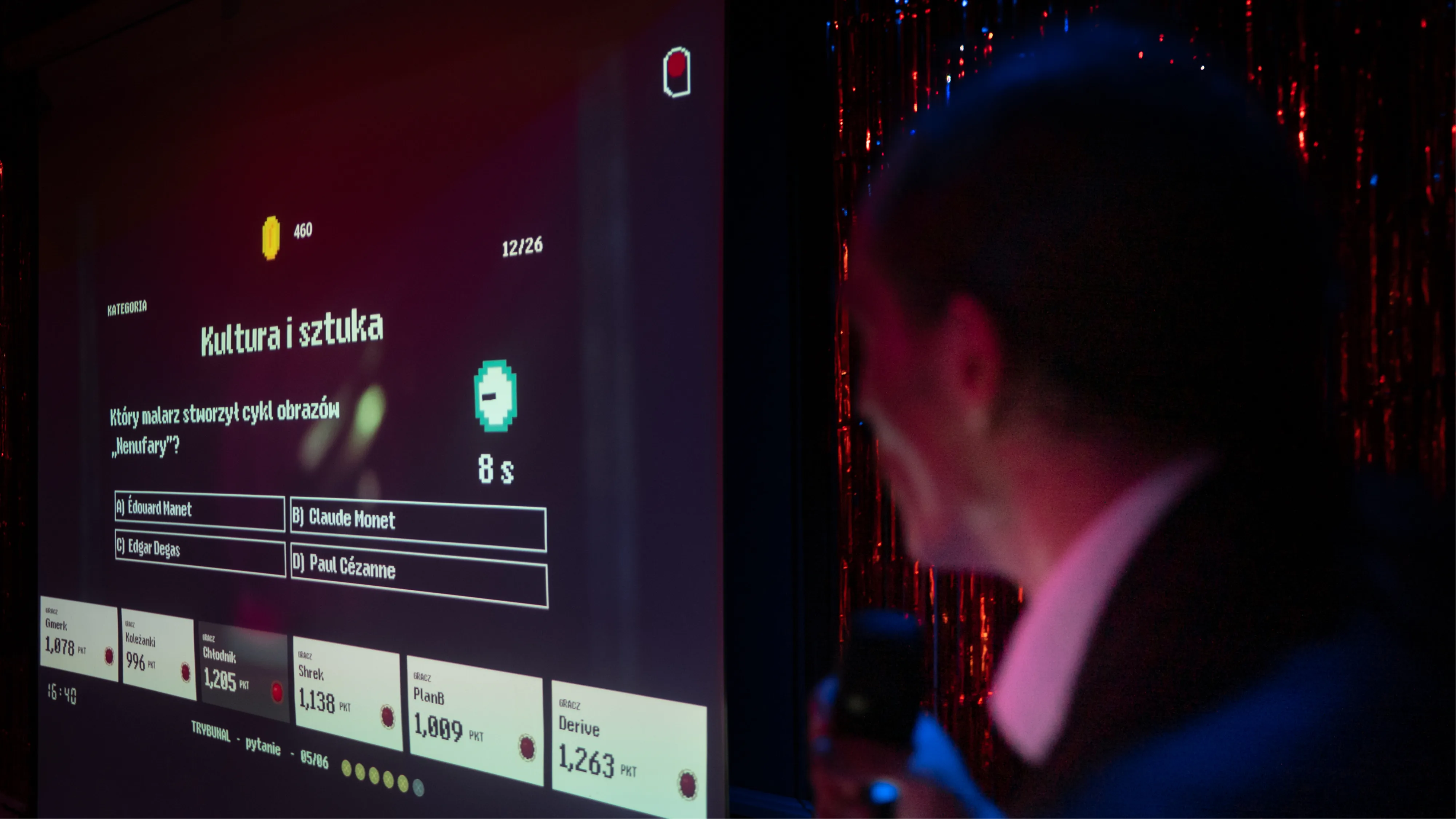
Gamification is mostly associated with museums today, but the mechanics behind it — scoring, competition, instant feedback — work just as well in a school, an education centre, or corporate training. It turns an audience from listeners into people who have to make a decision and see its result right away.
Why Game Mechanics Work in Education
A traditional lesson or lecture is one-directional — feedback, if it comes at all, only arrives at a test, weeks later. Gamification shrinks that loop down to seconds: an answer, a point, a ranking, the next question. It's that immediacy that holds attention and builds motivation to keep playing, not just to memorise facts.
School Groups as a Distinct Audience
A school group isn't a smaller version of an adult audience — it has a different attention dynamic, a different tolerance for boredom, different peer pressure. Designing gamification for a group like this needs a different approach than a format built for a single visitor. We cover this in more depth in engaging school groups in museums.
Dedicated Hardware vs. an App on the Student's Phone
A format built on an app installed on a student's phone looks attractive on paper, but in practice it fails wherever any technology dependent on someone else's device fails — weak Wi-Fi, no storage space, different operating systems in one classroom. Dedicated consoles, like the system described in ESP32 — a quiz without an app, remove that variable entirely: every participant gets the same working hardware, regardless of what's in their pocket.
Where "Education" Ends and "Museum" Begins
In practice, that's an artificial divide — our system Rewanż, built on ESP32 microcontrollers and an Unreal Engine 5 application, works just as well as a mobile game show at an event as it does as an education format for an organised group at a cultural institution. What changes isn't the technology, only the questions and the learning objective chosen for the specific audience — more in the Rewanż museum-education case study.
If you're considering gamification as part of an education programme — at a school, a science centre, or a company — get in touch. See also our gamification and museum technology service.
See also how a real computer game differs from points bolted onto an existing tour: a computer game as an education tool in museums.