
Projection Mapping in Theatre — How Image Becomes Part of the Set
February 24, 2026
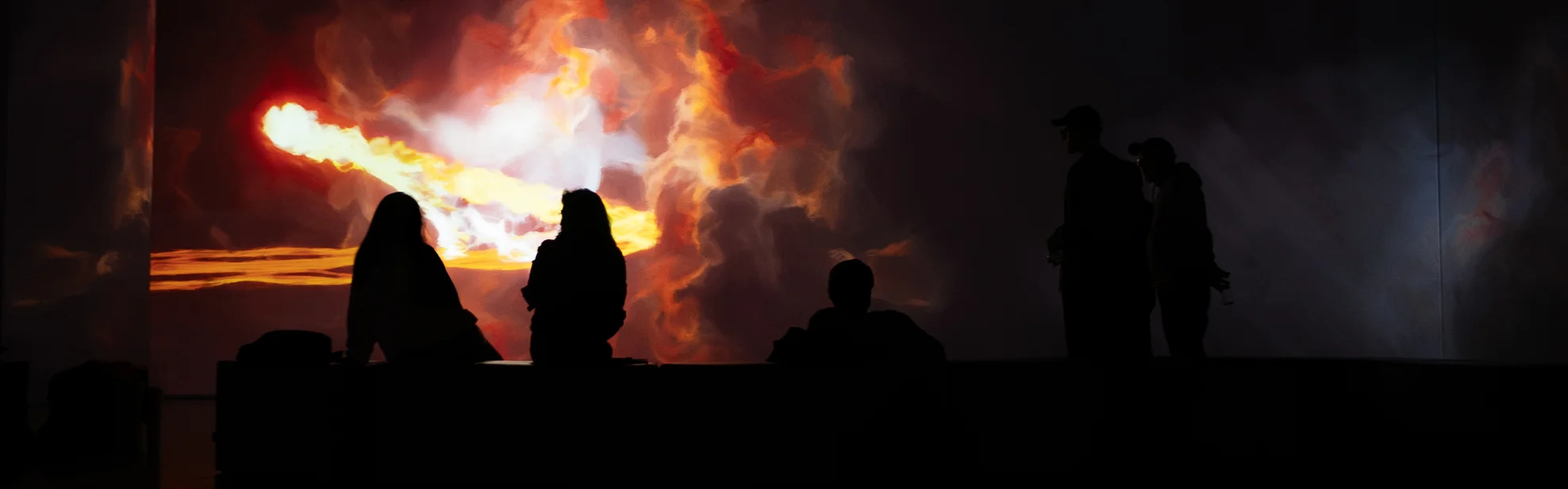
Projection mapping is often confused with projecting onto a flat screen — but it's a completely different tool. Instead of displaying an image on the stage, it fits the image to the stage's actual geometry: walls, columns, the irregular forms of the set. The image stops being a backdrop and becomes part of the production's architecture.
From Screen to Space
Classic theatrical projection treats the image as a separate layer — something that happens behind the actors, independent of what's happening on stage. Projection mapping reverses that logic. The starting point is always the physical set: its shape, its material, the way it reflects light.
The process begins with a precise scan or 3D model of the space. Only then do we design an animation that "knows" where every edge, every irregularity in the surface, is at any given moment.
The image doesn't illustrate the set — it co-creates it. It's a subtle difference, but it changes how the director and set designer think about the space right from the design stage.
What This Means in Practice
A few things change in a production when projection mapping is part of the concept from the start, rather than tacked on at the end:
- The set can be physically simpler — light and image add the detail and texture.
- Changing a scene's mood doesn't require rebuilding the set, just a new visual sequence.
- The constraints of a small stage (as in intimate productions) can be worked around by building depth through image rather than square footage.
Where This Shows in Our Work
In Rural Mapping, the image literally returns to the place it came from — the projection inside a barn is built on a 3D scan of that same barn. In Wiera Gran, the constraints of Polski Theatre, Poznań's smallest stage were offset by a visual layer integrated with the set and lighting.
The same logic — geometry of the space first, image second — also holds up outside the theatre: in "Romantic Chopin" for the Art Box Experience Immersive Gallery, a painterly animation about the composer's life was designed for the architecture of the exhibition hall, not a stage.
If you're working on a production where the space itself is meant to be part of the story, let's talk early in the concept stage. That's the best moment for image and set to be designed together, rather than one after the other.
See rewir.studio's projection mapping service for theatres and cultural institutions.