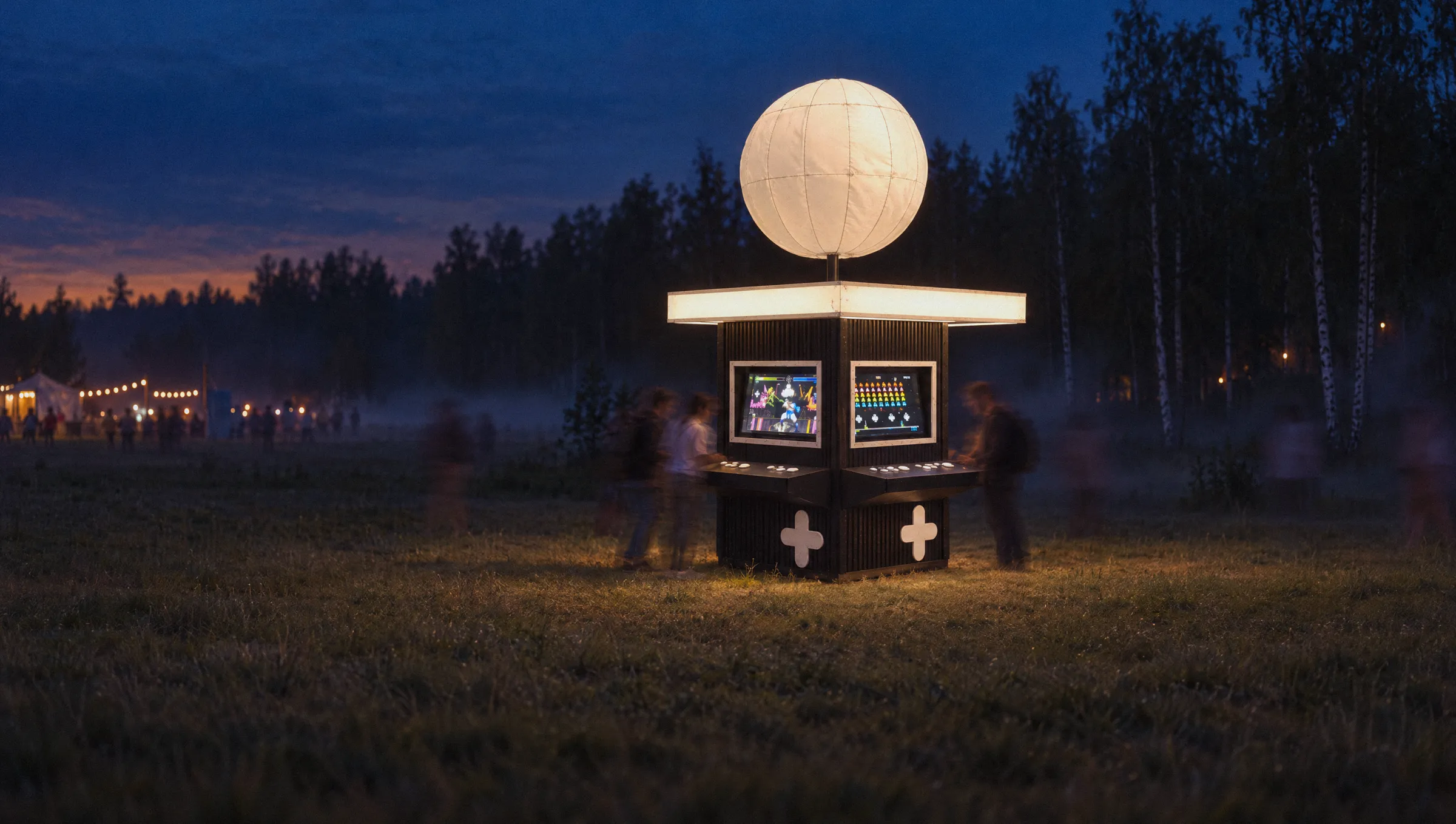
At a festival, a trade fair or a shopping centre, a brand has a few seconds to make someone stop. Flyers end up in the bin and an ad screen blends in with all the other screens. A glowing arcade cabinet where someone is breaking a record, with a small crowd cheering behind them, works differently. That is the idea behind Salon gier — our format of retro arcade stations designed from scratch for a specific brand.
Why retro games work at events
Games in the style of classic arcade machines are back in the mainstream, and at an event they have three advantages.
The rules take seconds to understand. A joystick, two buttons, one goal. No instructions and no app to install, so even people who “don’t play games” step up.
Nostalgia works across generations. Pixel graphics and arcade sounds remind older guests of game halls and appeal to younger ones through the retro and analogue-tech trend.
A game is a show. You can see and hear the play from afar, and competition draws spectators. The queue itself becomes advertising, and people happily film and share their scores.
A game instead of an ad
In Salon gier the guest doesn’t watch an ad — they step into the brand’s game world. We design the mechanics together with the brand team, starting from the product and its story. The hero, graphics, colours and sound come from the brand identity, while the gameplay stays as simple as on a classic arcade machine.
On the project page you can try four example game concepts: a fighting game, snake, a race and Plus Drop. They run in the browser, on desktop and on mobile. They are a starting point for a conversation, not a catalogue — every brand game is designed from scratch.
Kiosk or pavilion
We match the scale of the station to the event. We have developed two concepts:
The kiosk is a small form with a glowing brand sign visible from afar. It works at a festival, a trade fair or in a shopping centre. We design the consoles, buttons and screens together with the scenography, so the station looks like part of the brand identity rather than a rented cabinet.
The pavilion is a large scenographic installation. Arcade games stand on the ground floor, while on the terrace spectators cheer or relax on beanbags and in hammocks. Some play, others watch, and the brand gains a place where people spend time instead of just walking past.
What keeps people around
The game draws people in, but whether they come back depends on what happens around it:
- Daily leaderboard. A score table builds competition — people return to beat the record.
- A screen for the audience. A big screen turns a single game into a show for everyone nearby.
- Contact with consent. Players save their score via a QR code and can leave their details, so the brand builds a list of people who actually engaged with it.
- Grand Final. We invite the best players by text or email to a final with prizes — an extra moment of the event and a reason to come back.
From brief to event
We work in five steps: brief (brand, event and goal), concept (game and stand design), production (building the station, programming the game, testing with players), event (installation and on-site technical support) and report — number of games played, peak hours and contacts collected. With the report, the brand knows what the stand achieved, not just that it looked good.
What to keep in mind when planning
Location and visitor flow. The station should stand where guests naturally pass, with room for a queue and spectators.
Short rounds. A round should last about a minute or two, so the queue keeps moving and everyone can try several times.
On-site staff. Someone needs to invite people to play, keep an eye on the leaderboard and react when something stops working. Technical support is part of our format.
It already works live
Competing at consoles in front of an audience has proven itself in Rewanż — a live game show we designed and built from scratch. At Plac Zabaw in Warsaw, players competed at the consoles while the audience cheered in front of the screen all evening. We write more about this format in “A Live Game Show at a Corporate Event”.
Planning a stand at a festival, a trade fair or a brand event? Write to us — every project is quoted individually after the brief.