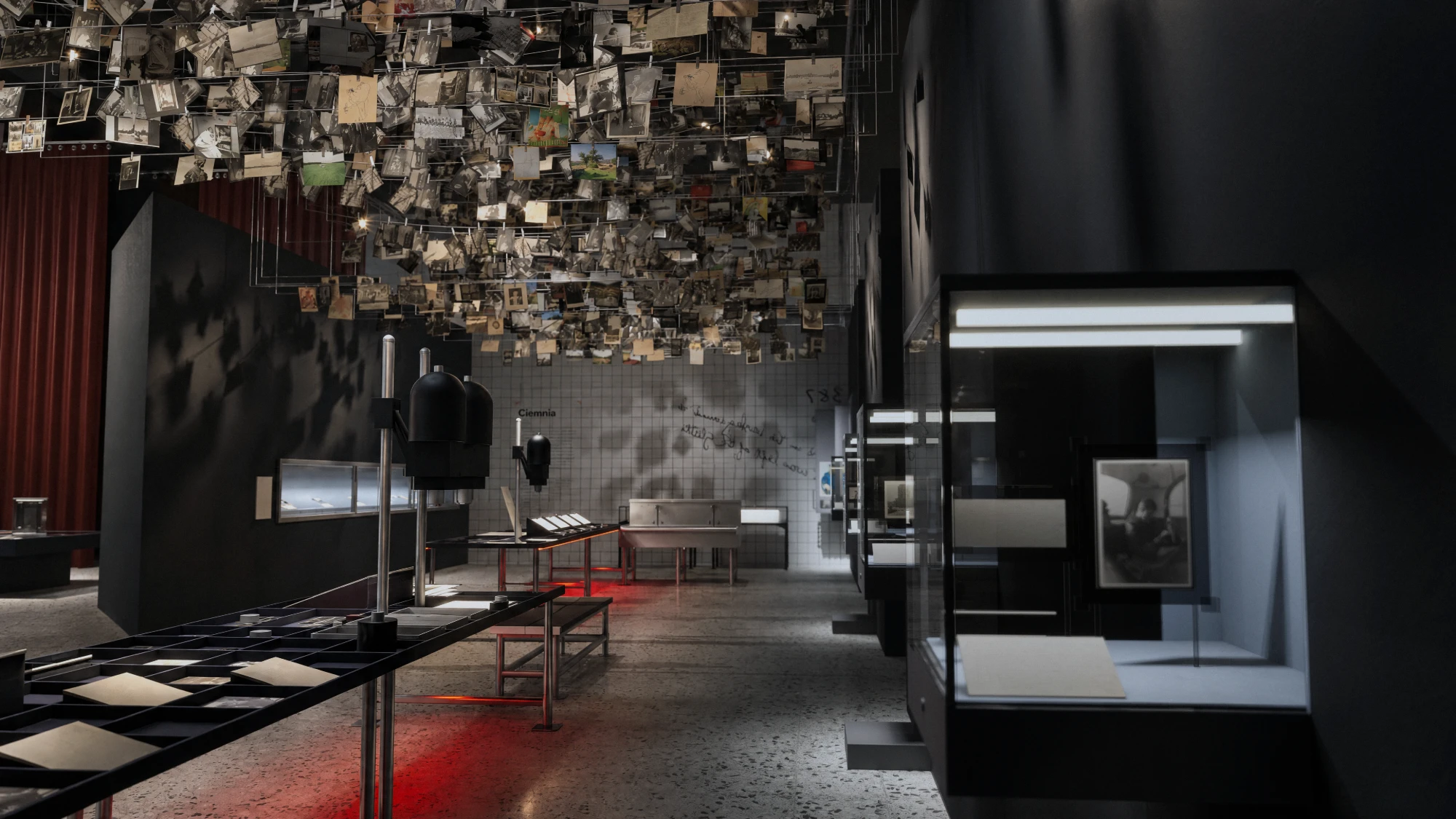
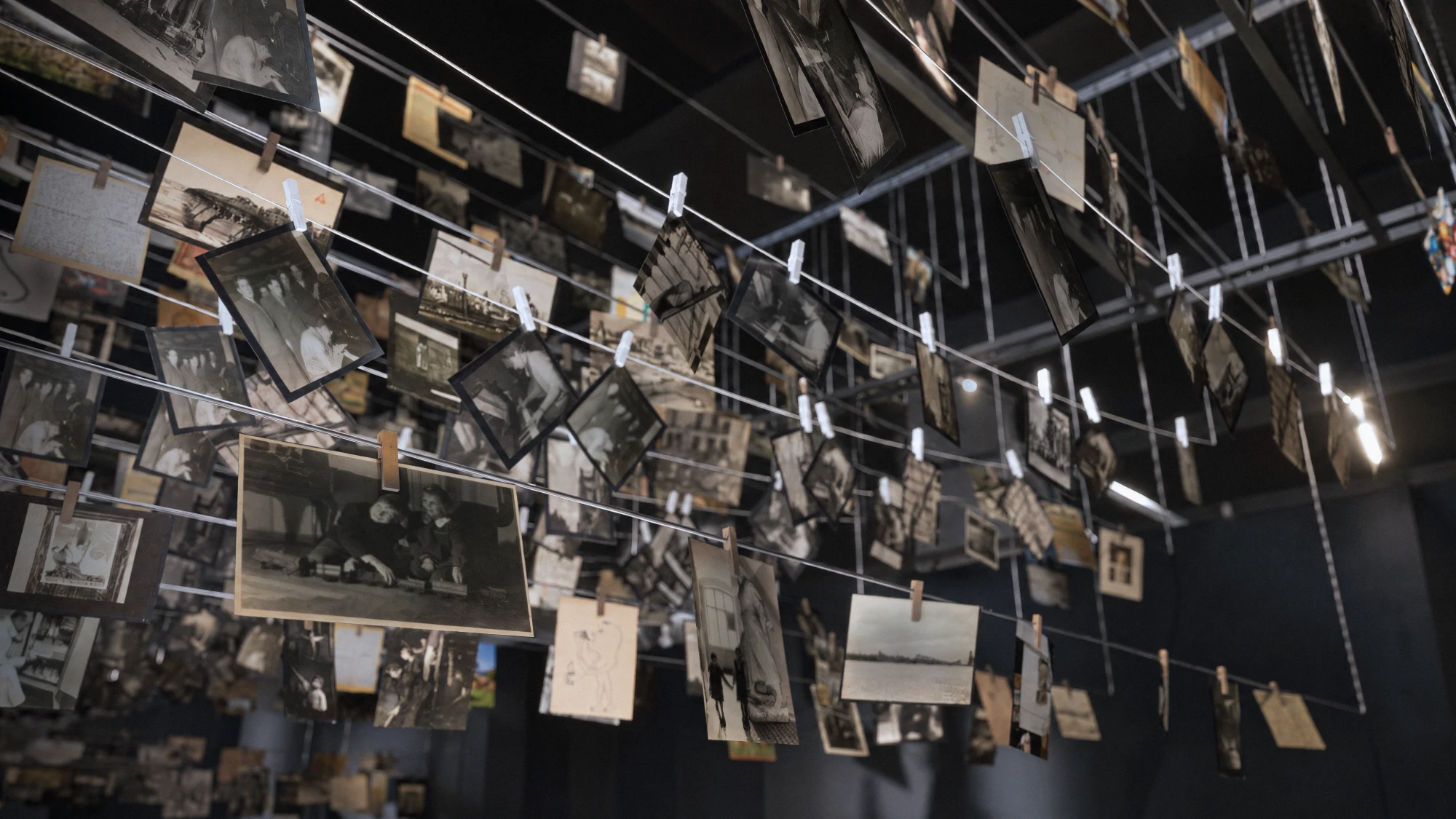
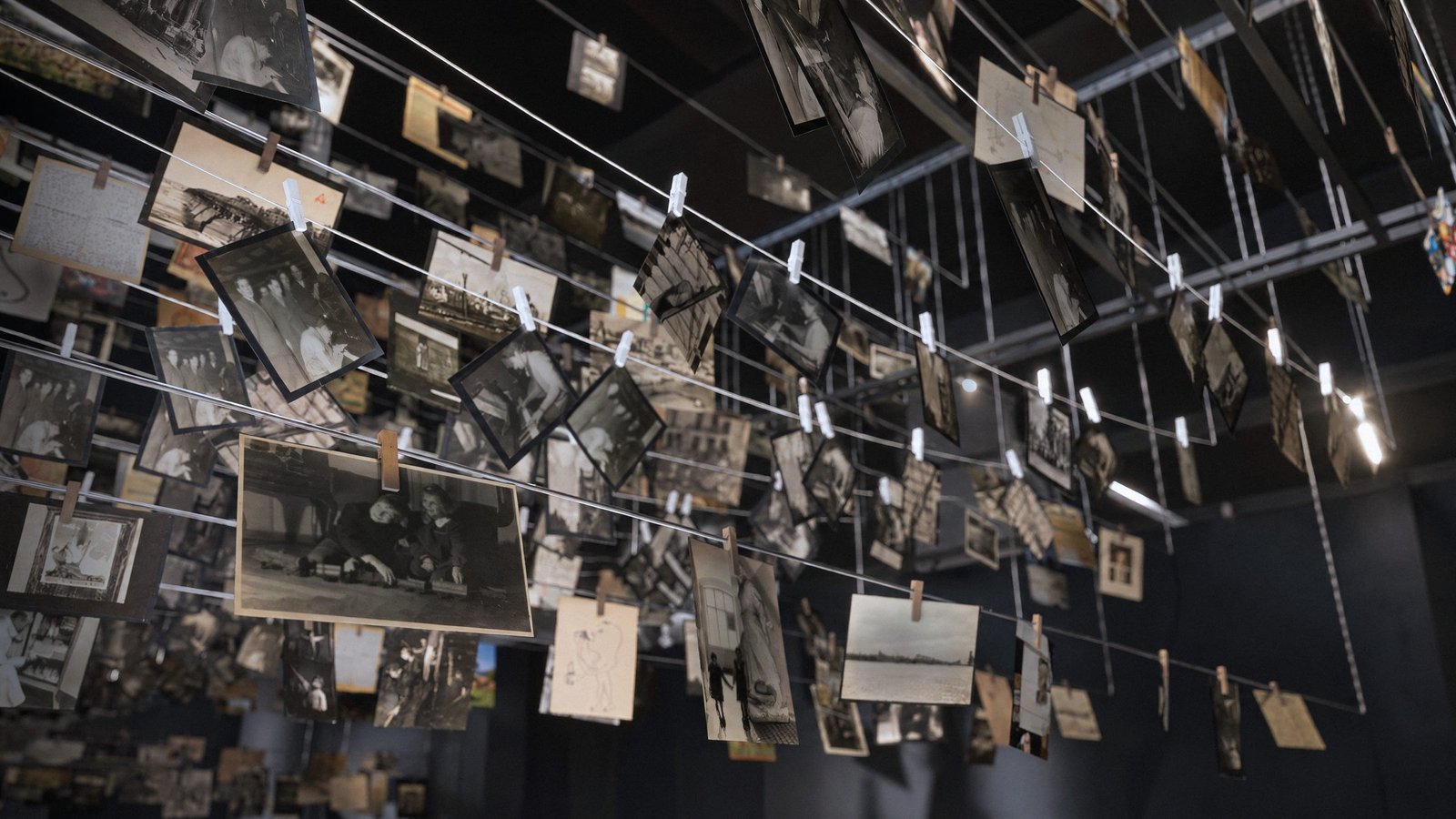
Love. John. 1946. — the Darkroom, photographs hanging above the space

Exhibition concept · 2nd prize in the competition · 2026

Love. John. 1946.

Poland through the lens and letters of John Vachon — exhibition concept for the Museum of Polish History

Client
Museum of Polish History, Temporary Exhibitions Hall
Competition
Preliminary exhibition design concept, 2026
Result
2nd prize
Exhibition dates
09.2028 — 01.2029
Our role
Exhibition layout concept, exhibition design, multimedia and interactions, visual identity

The exhibition proposal tries to capture the unusual perspective of John Vachon, who, like today’s visitor, looked at post-war Poland through the eyes of a stranger.

The design translates that gaze into the language of a contemporary exhibition, focusing on the experience of looking, the search for meaning and the material side of reconstruction.

The concept won second prize in the Museum of Polish History competition and drew a lot of interest — above all for its modern approach to exhibition design, where multimedia meets analogue interaction. For a year we had the pleasure of studying John Vachon’s work.
Visitor route

0

Introduction

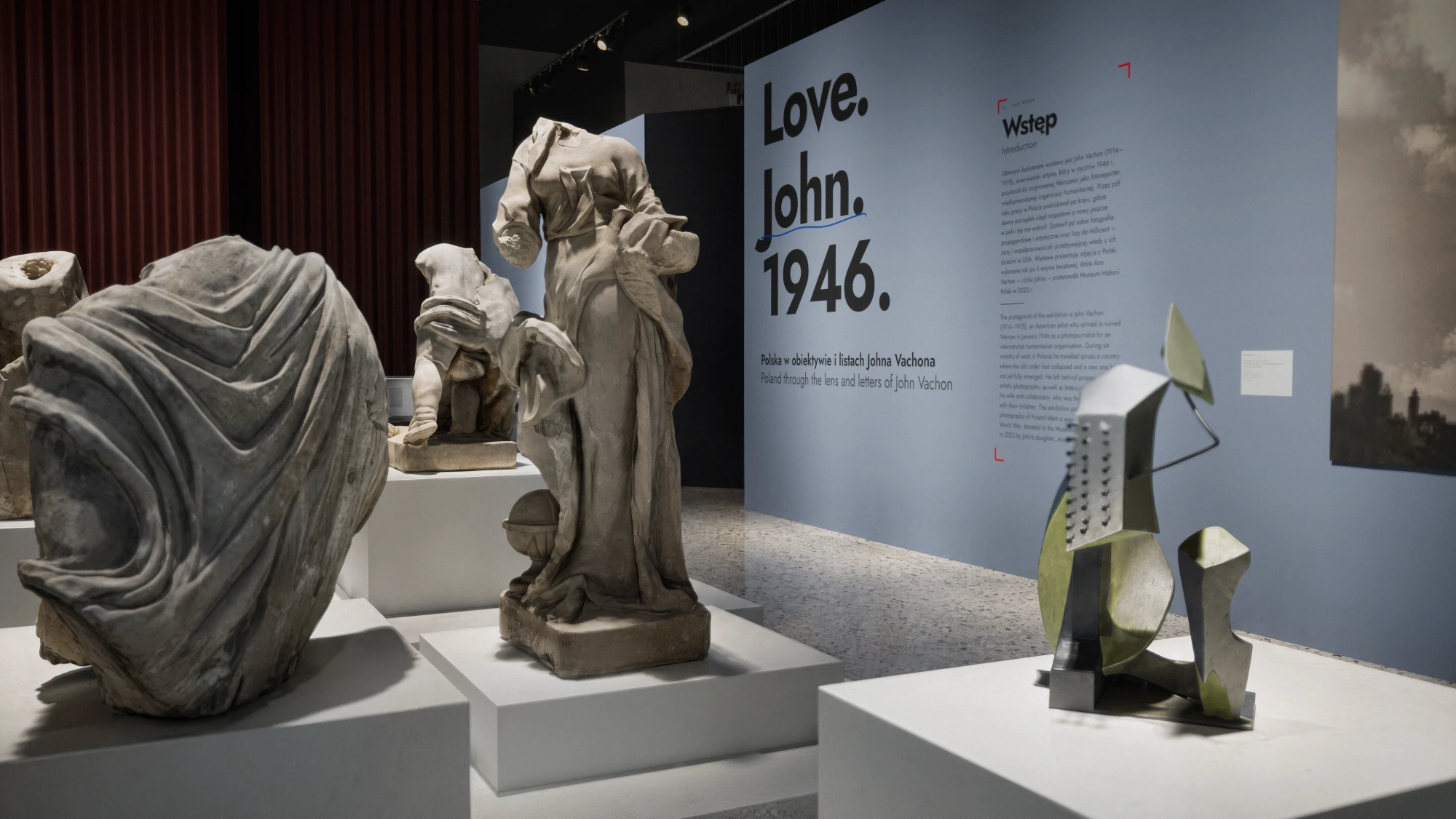
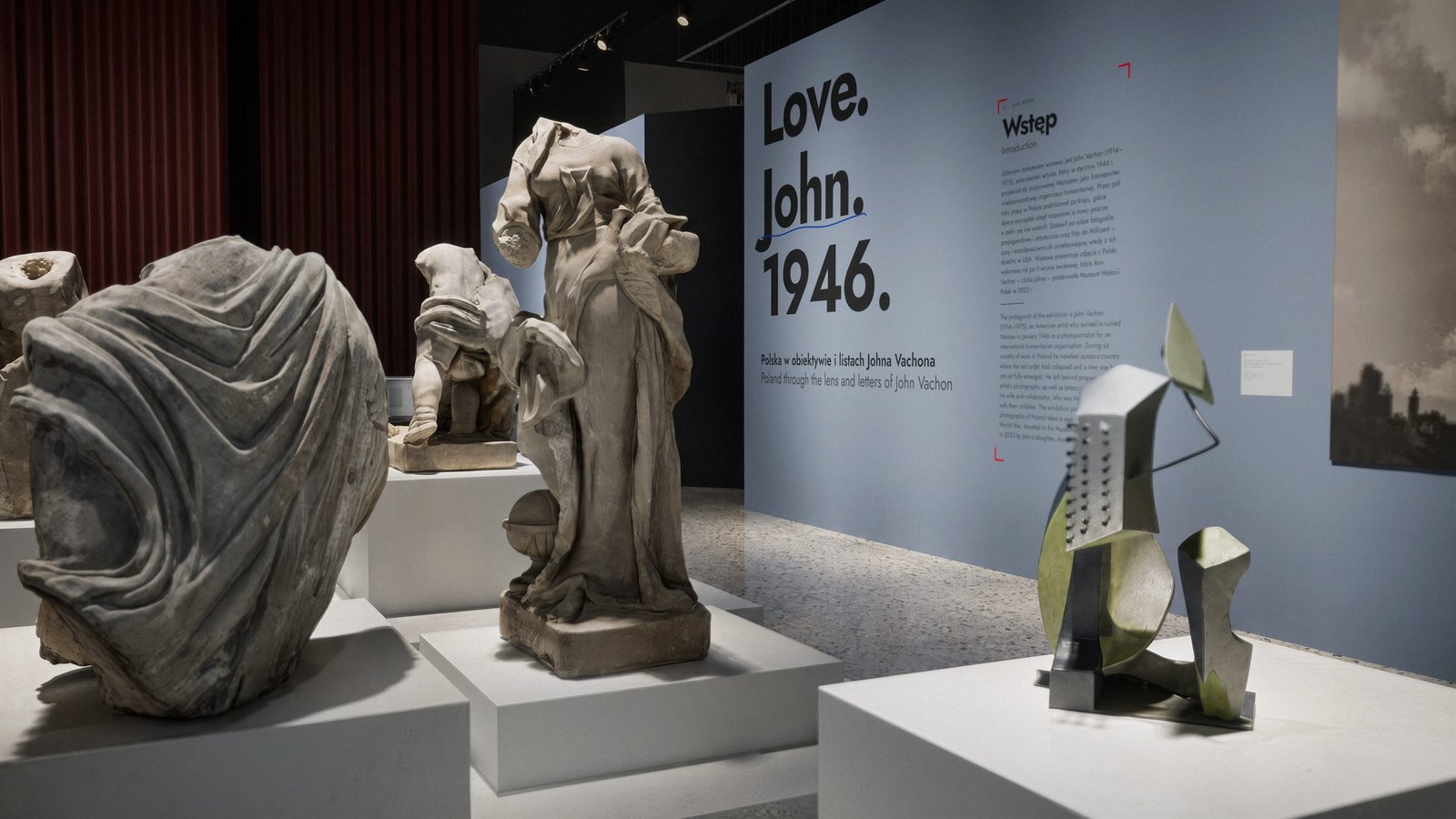
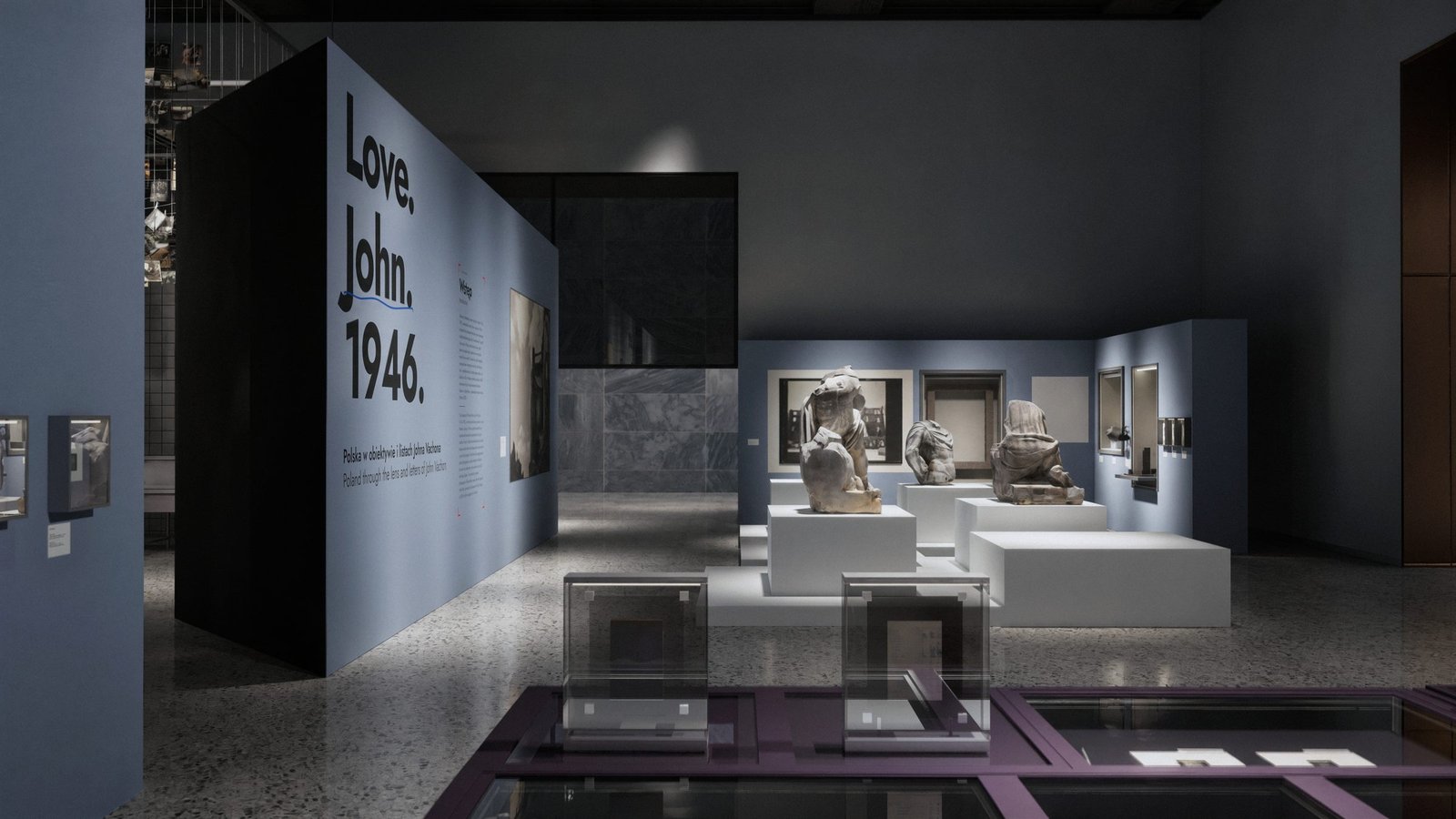
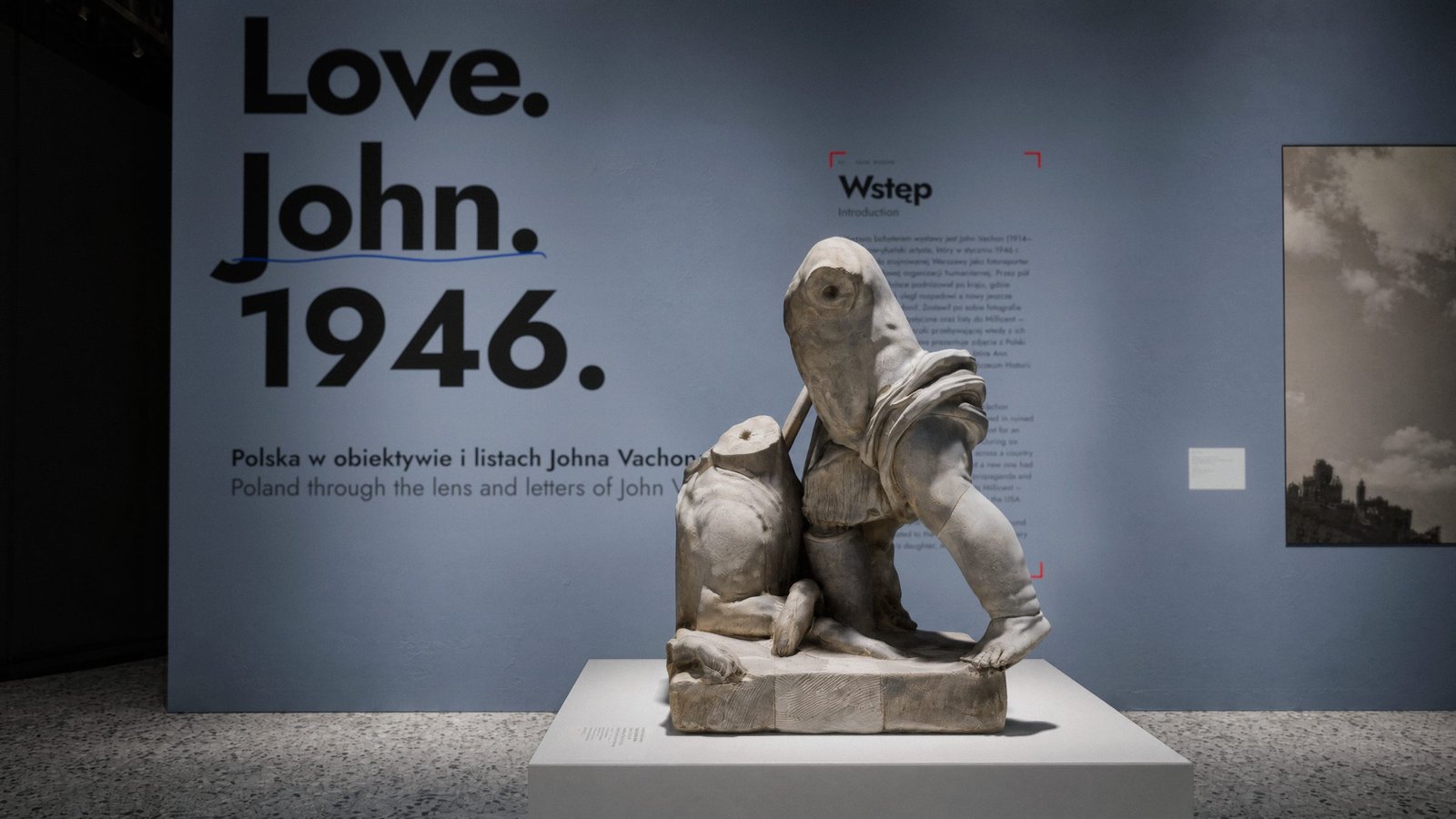
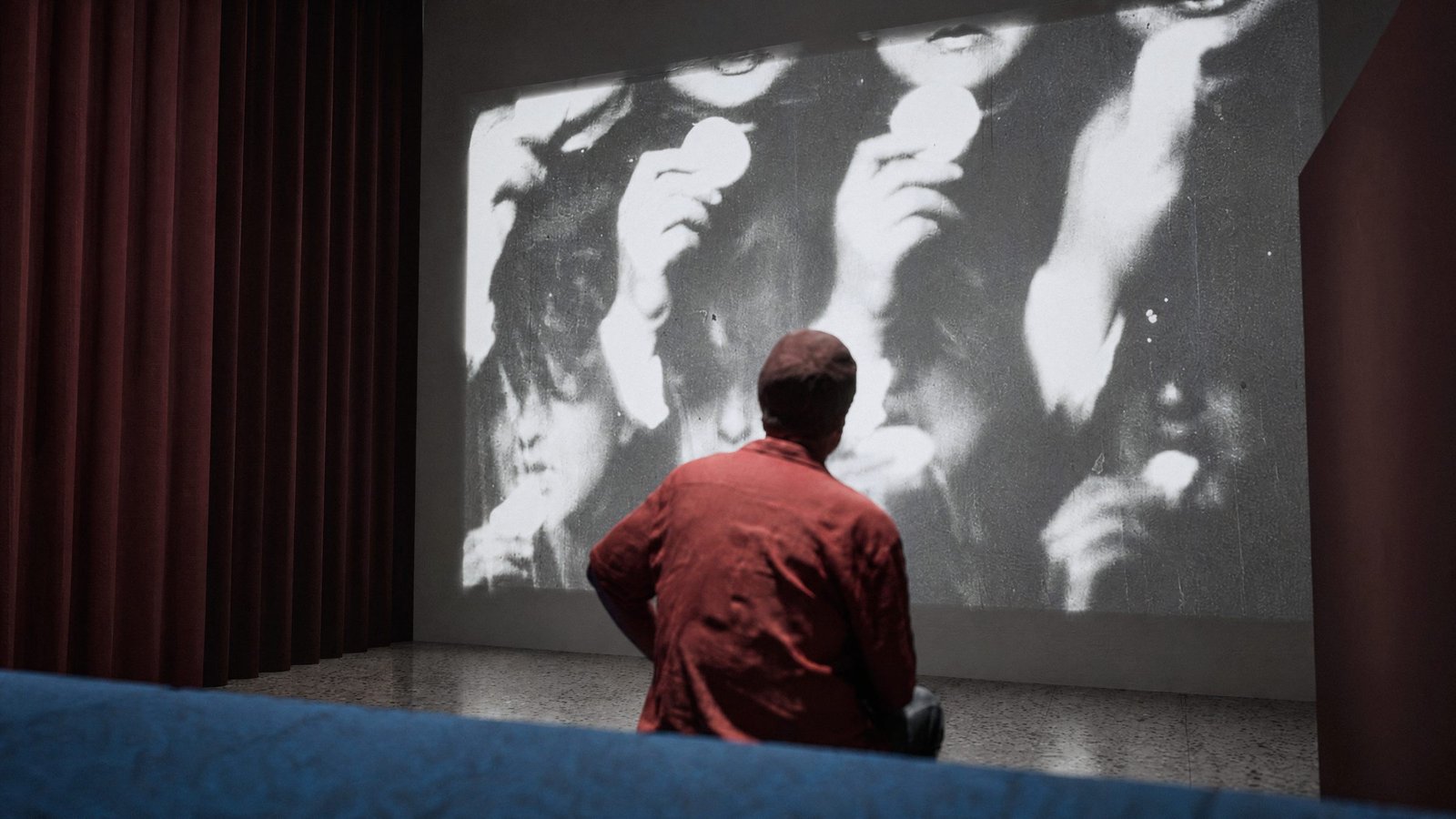
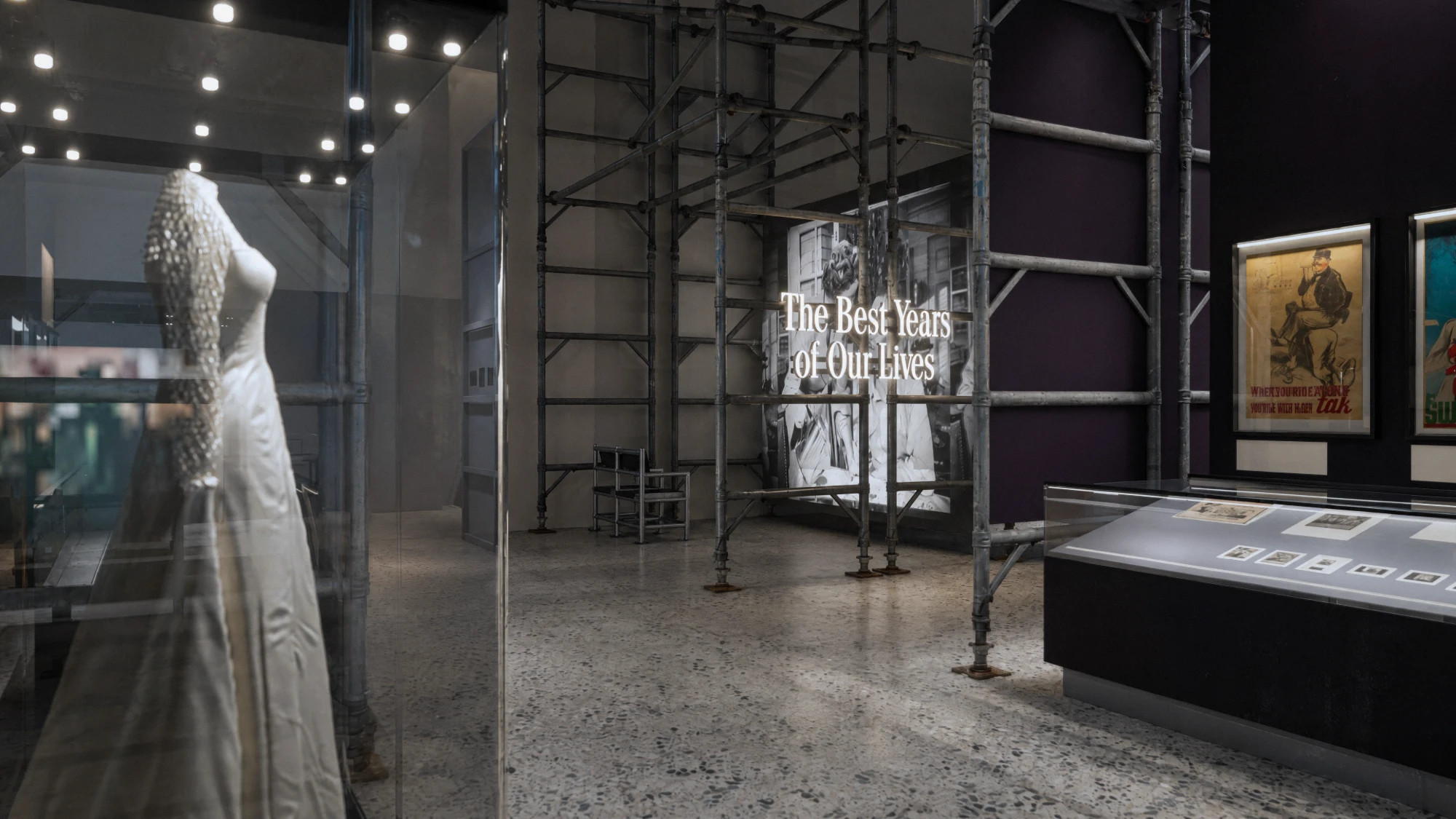
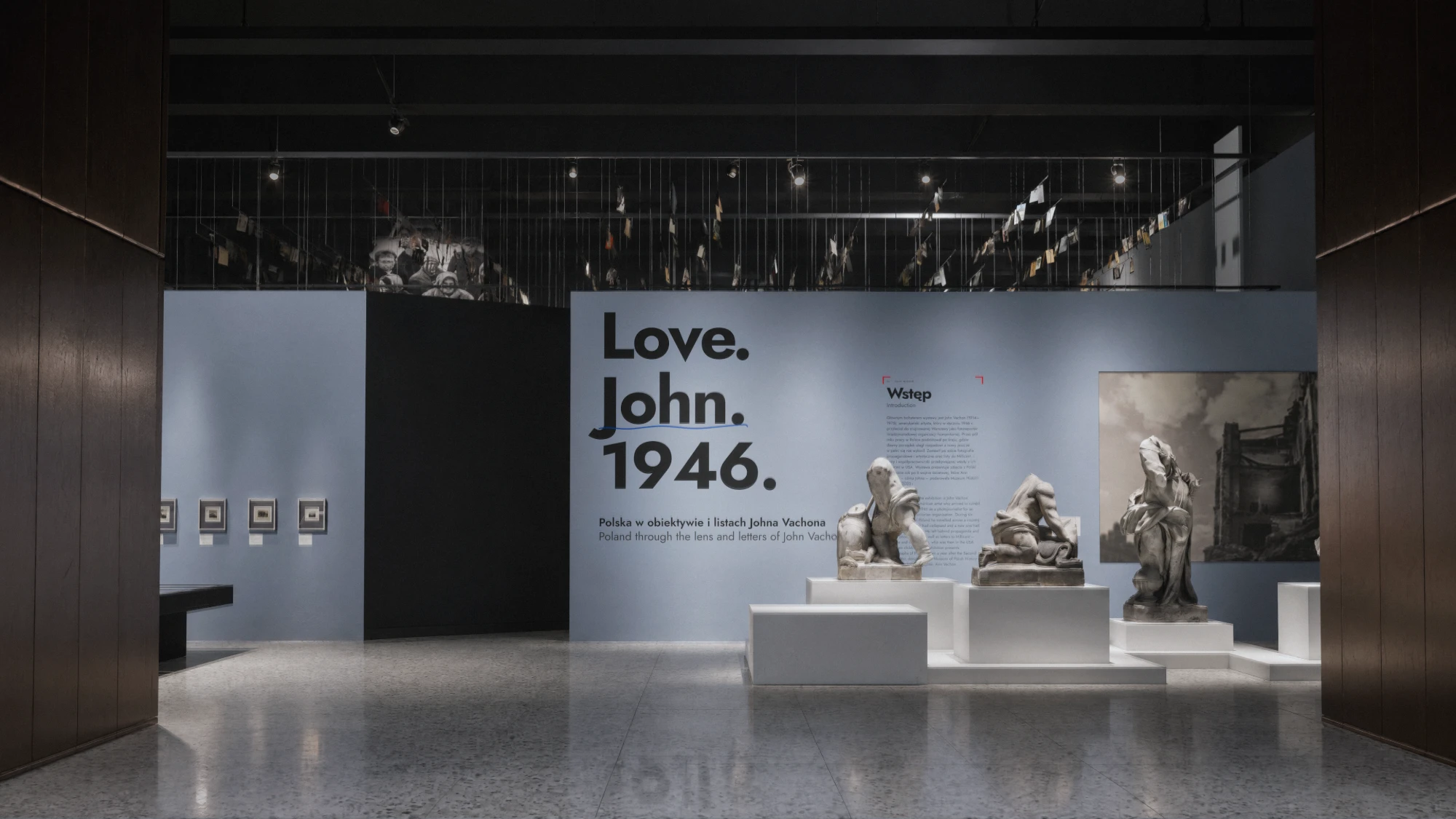
The entrance zone, composed classically and echoing neoclassical sculpture, sets a mood of gravity and mystery. From here visitors can enter the darkened cinema module and the “Warsaw Accuses” module, key to the historical context of the exhibition.

Entrance zone: the exhibition title and damaged sculptures
Damaged sculptures in front of the title wall
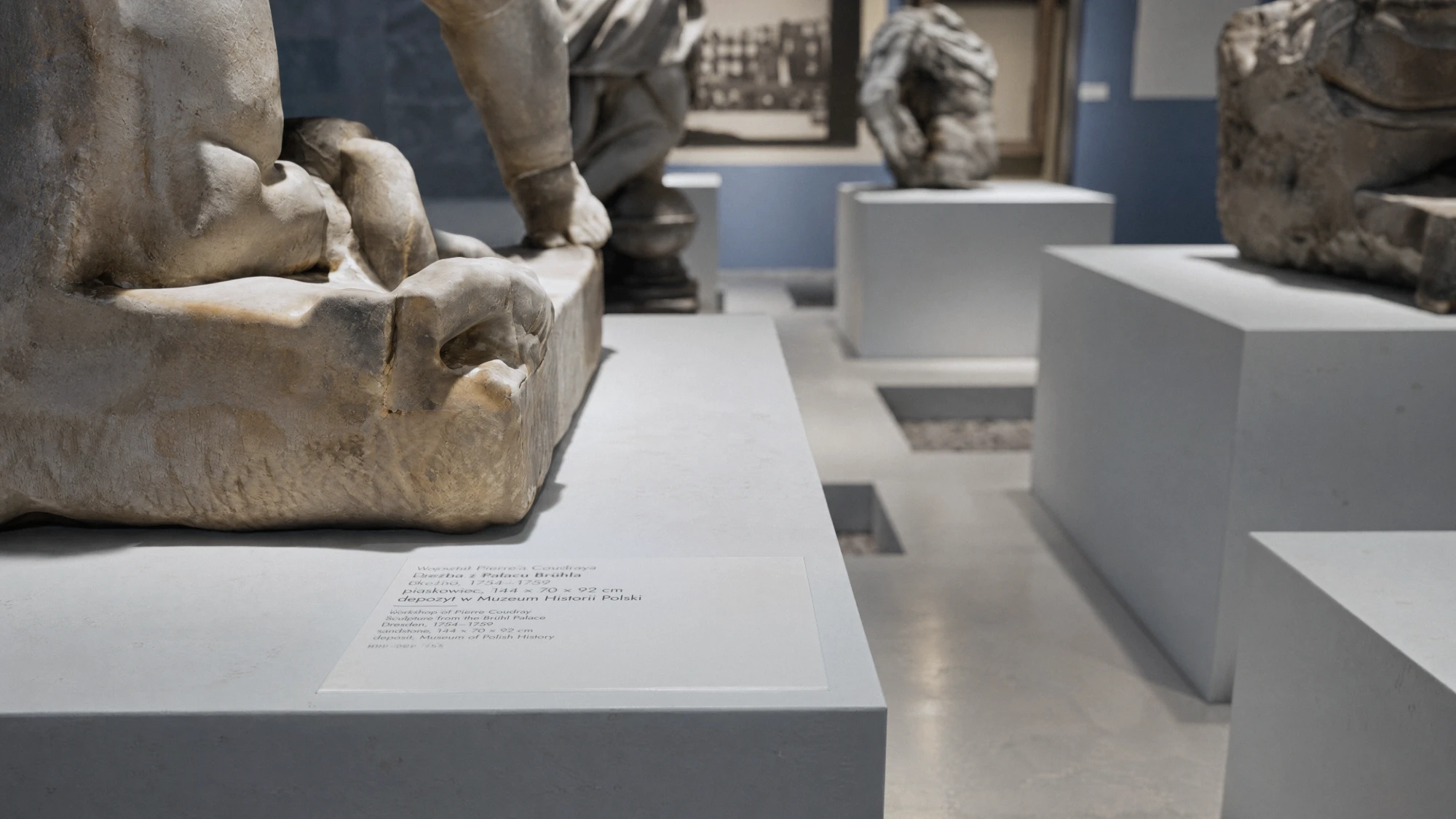
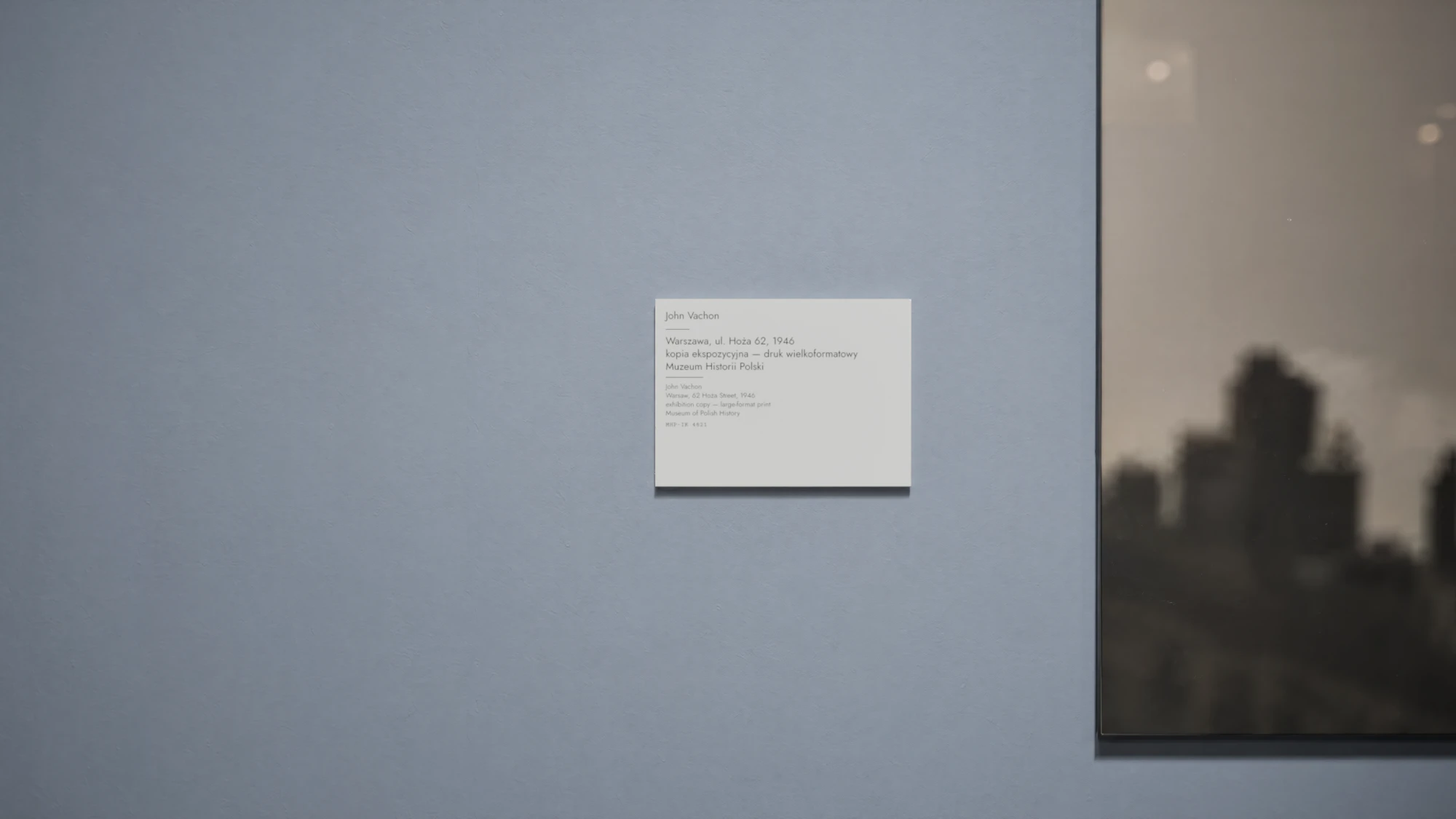
A label by the sculpture from the Brühl Palace
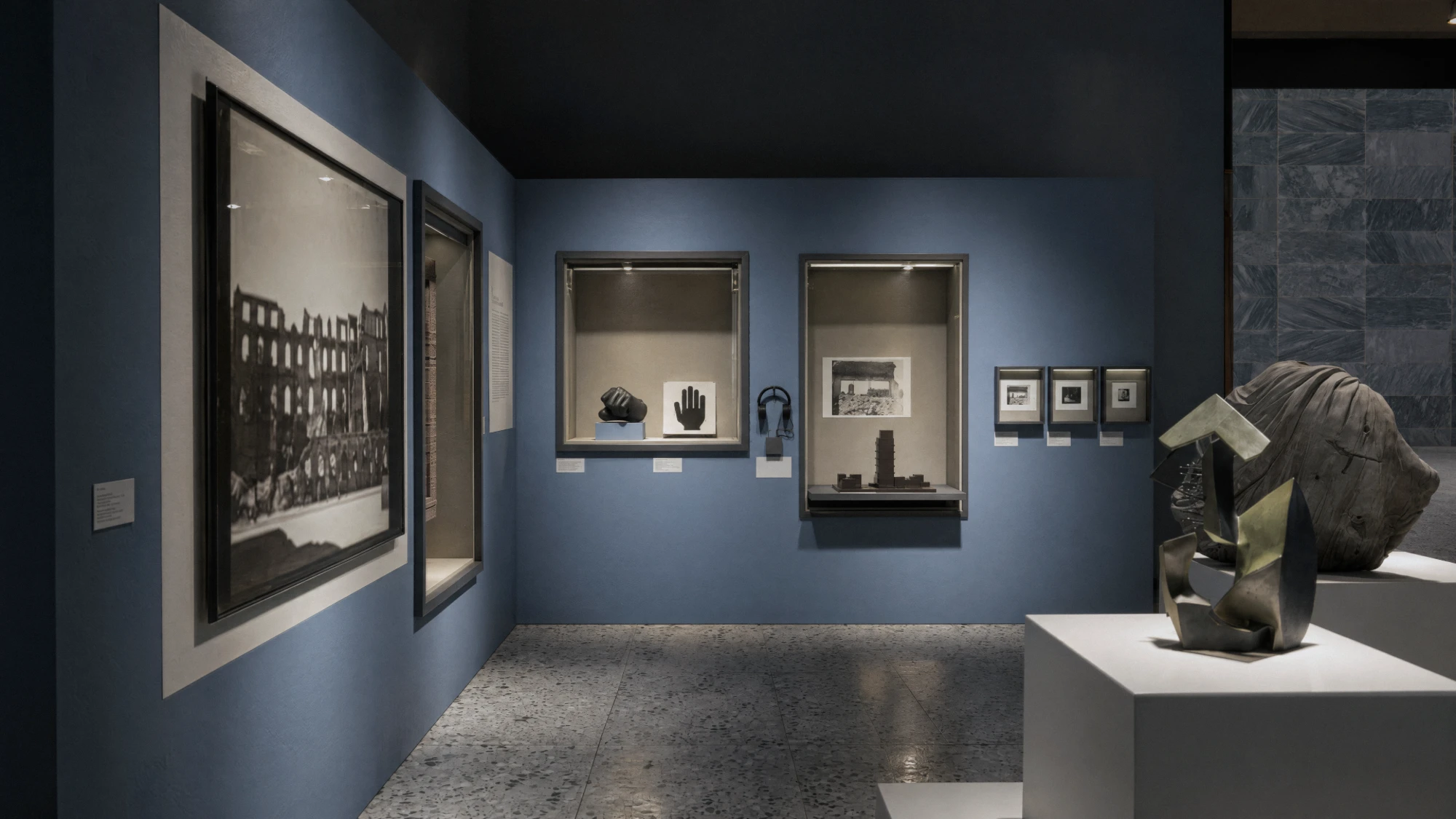
The “Warsaw Accuses” module — iconography, showcases and a tactile station
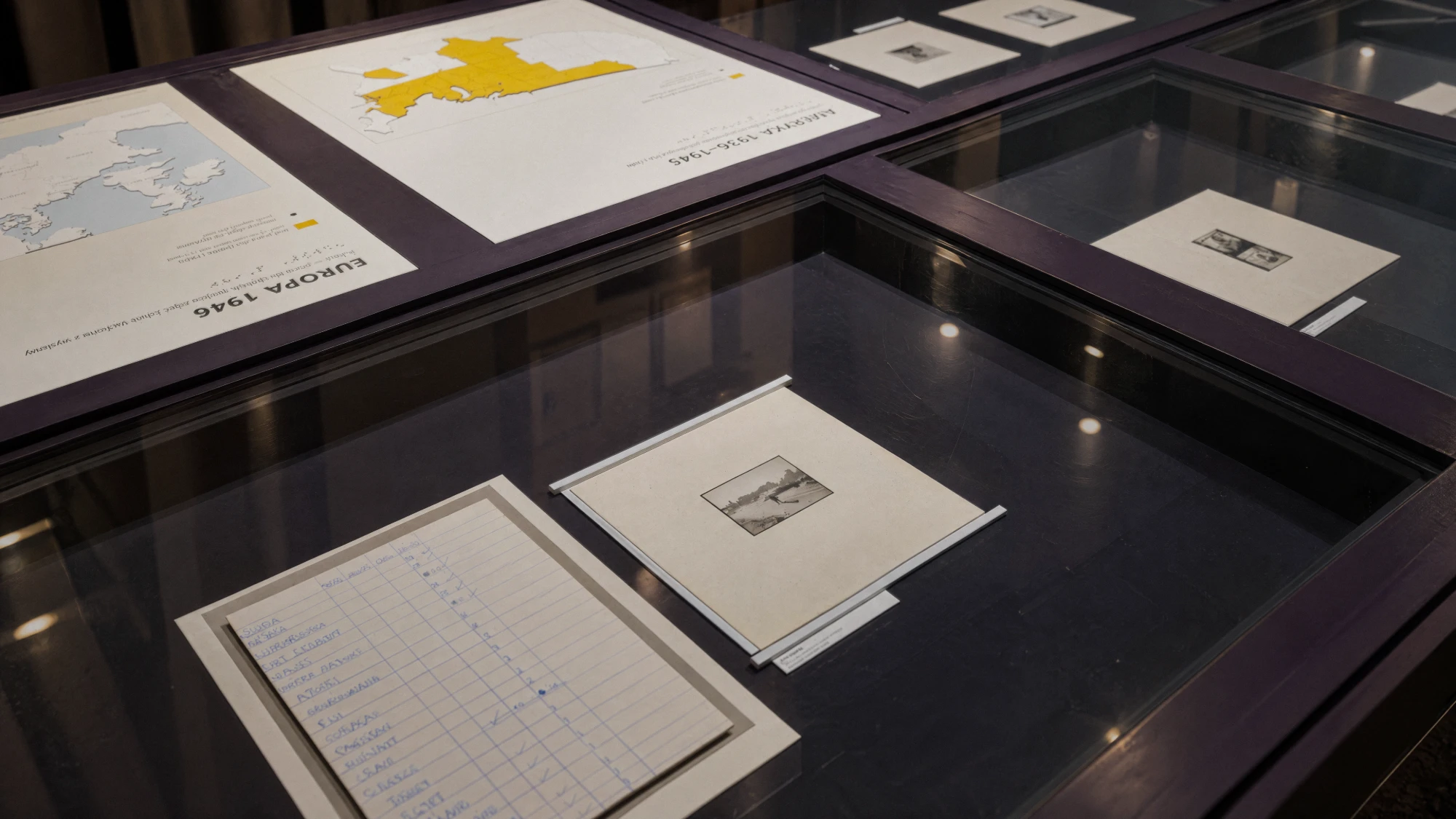
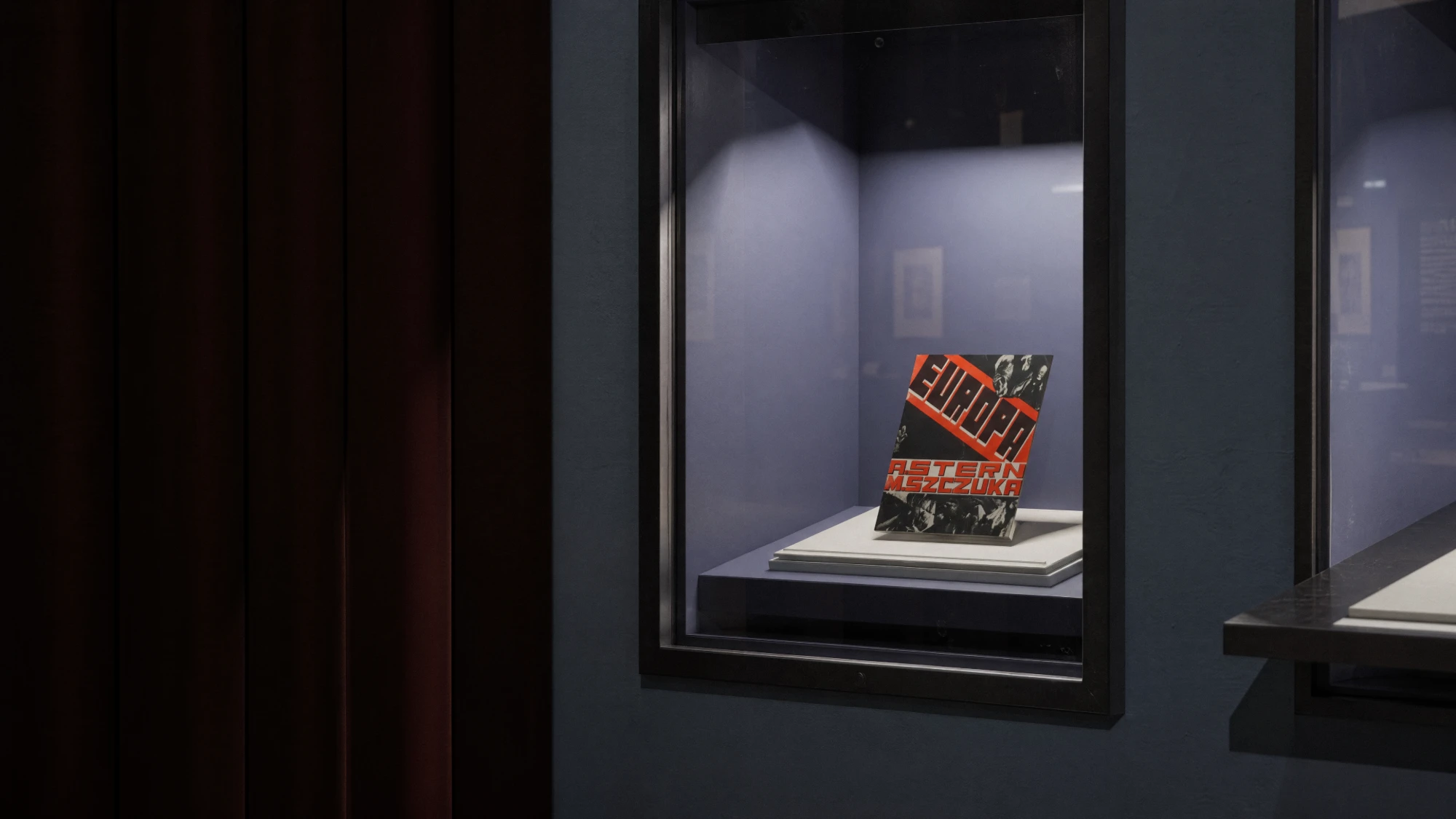
Table showcases — Europe 1946 and America 1936–1945

1

The Darkroom

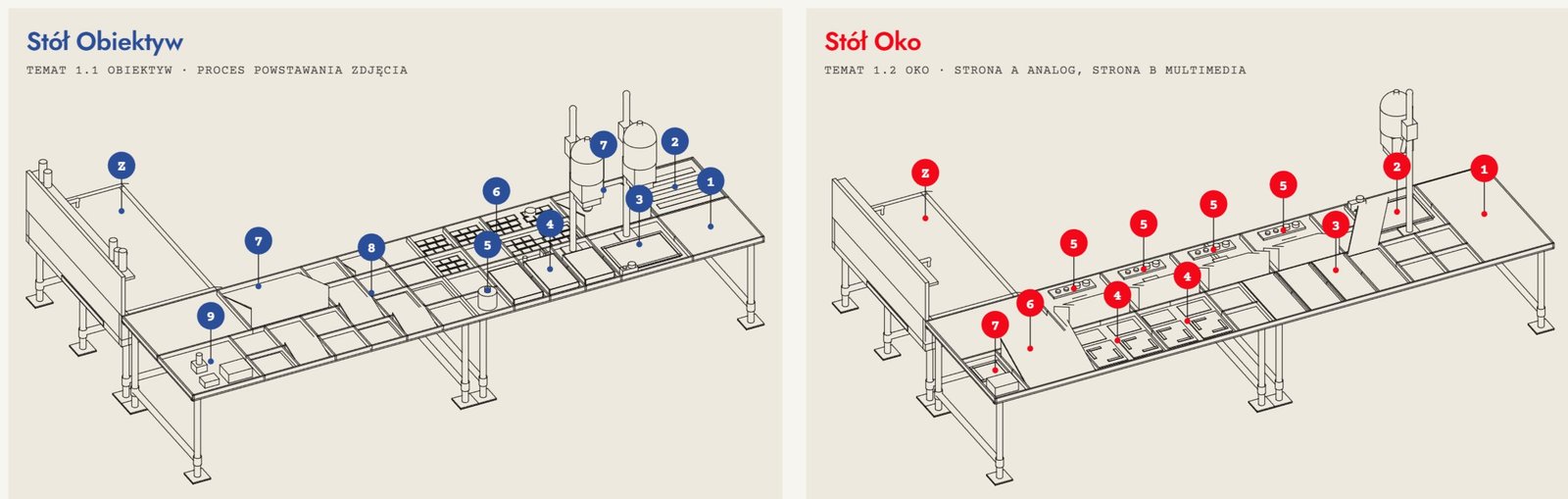
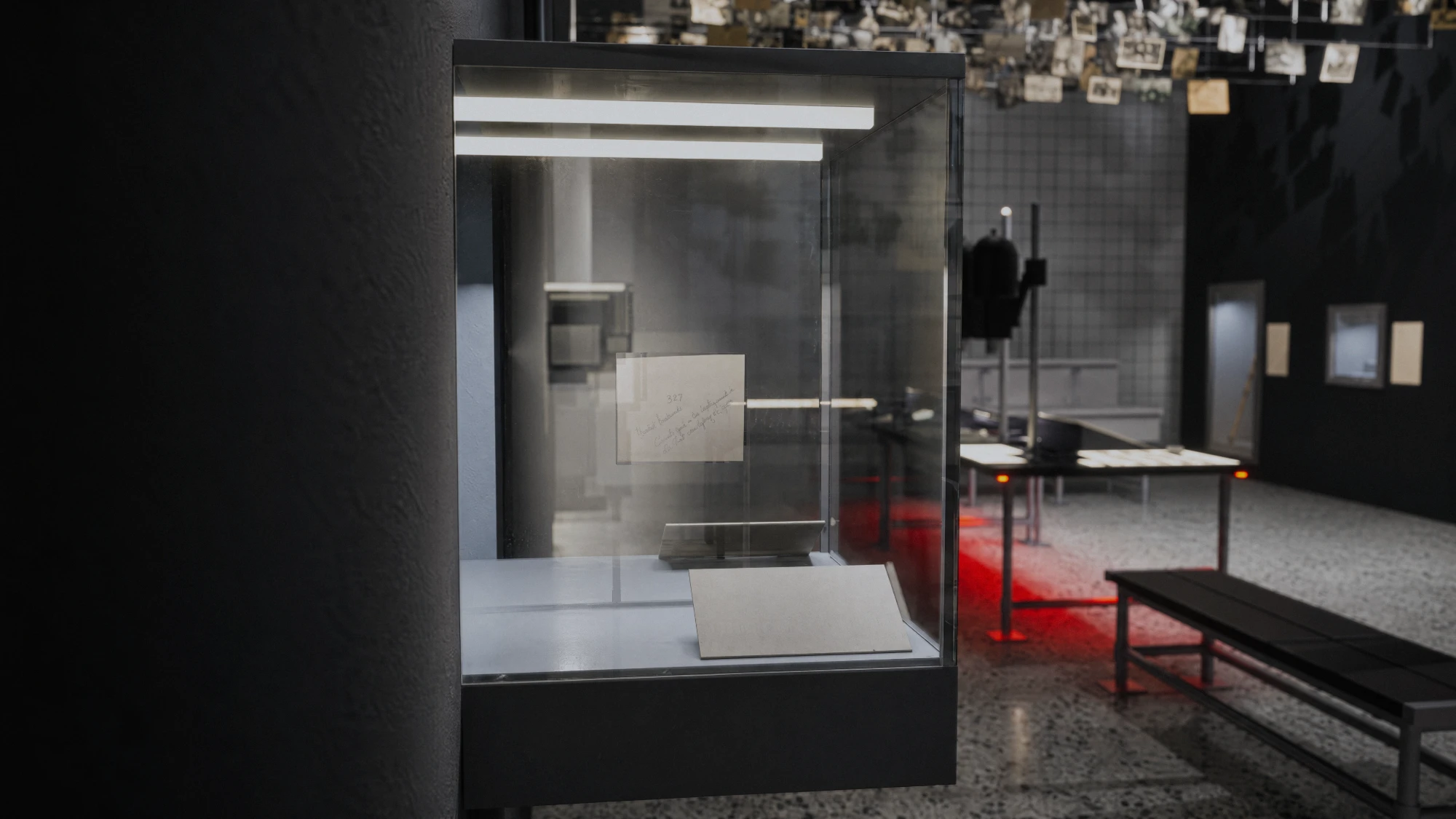
A slanting, dark corridor leads to “the Darkroom”, a space inspired by the analogue photographic process, understood as learning to see. A multisensory table introduces Vachon, his craft and his way of working, and prepares visitors to look closely at the next parts of the exhibition. You leave “the Darkroom” through a symbolic lens: an objective modelled on the Rolleiflex Vachon photographed with.

Darkroom worktables with enlargers in red light
An installation of prints hanging on lines
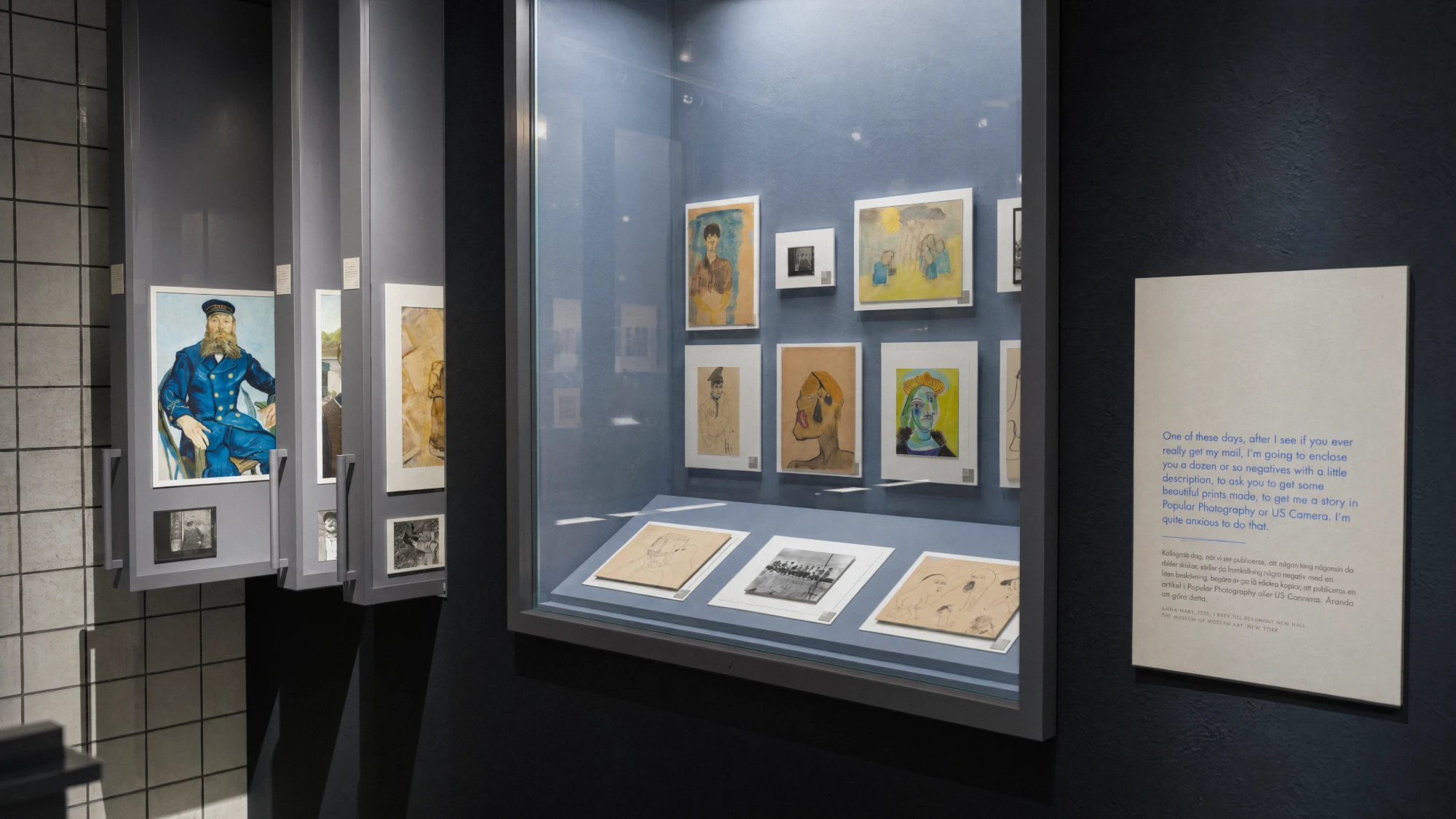
Showcases with the drawings and paintings that shaped Vachon’s eye
Axonometric drawing of the Lens and Eye worktables
The Lens and Eye worktables — axonometric drawing

B

The Library

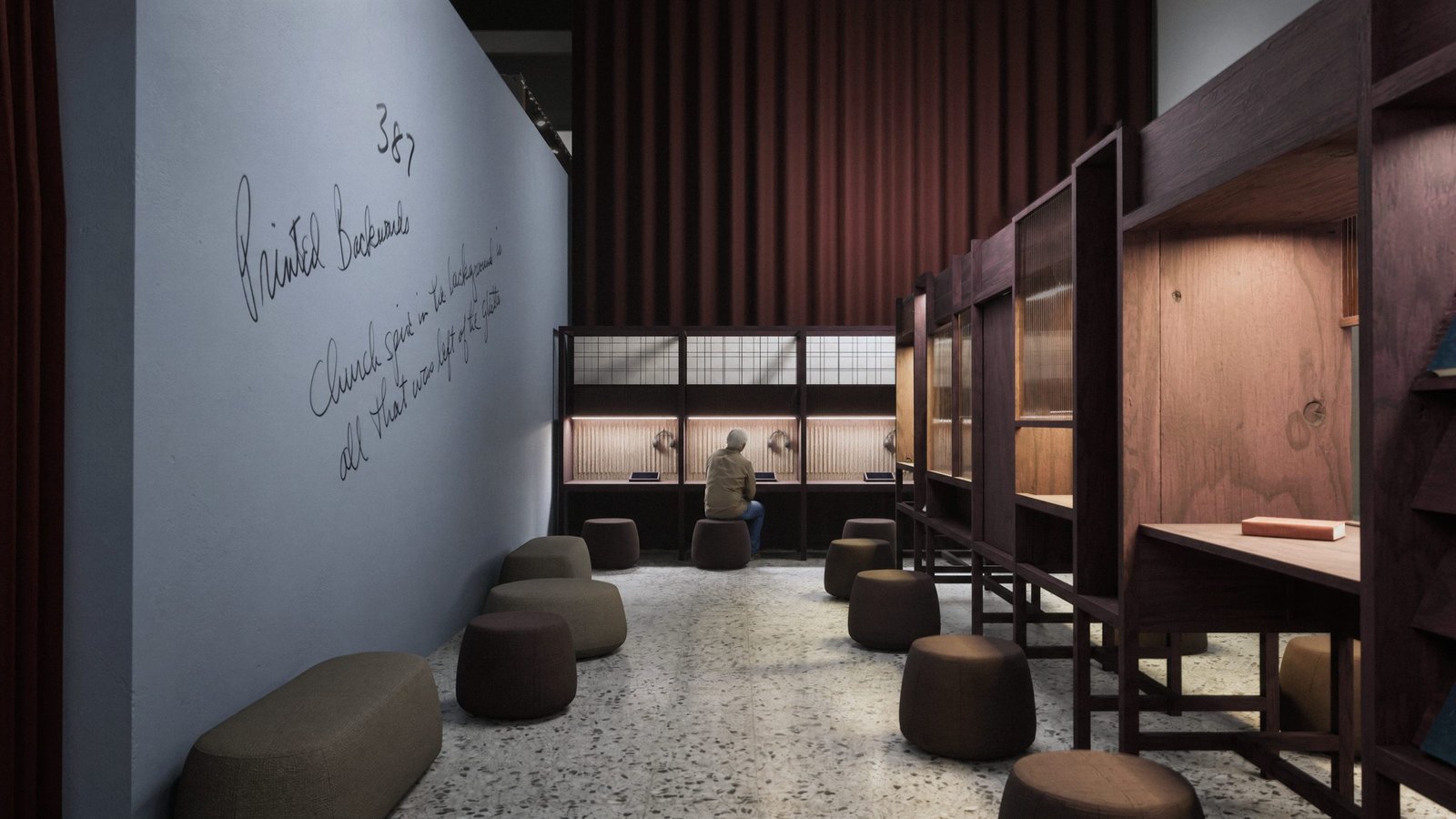
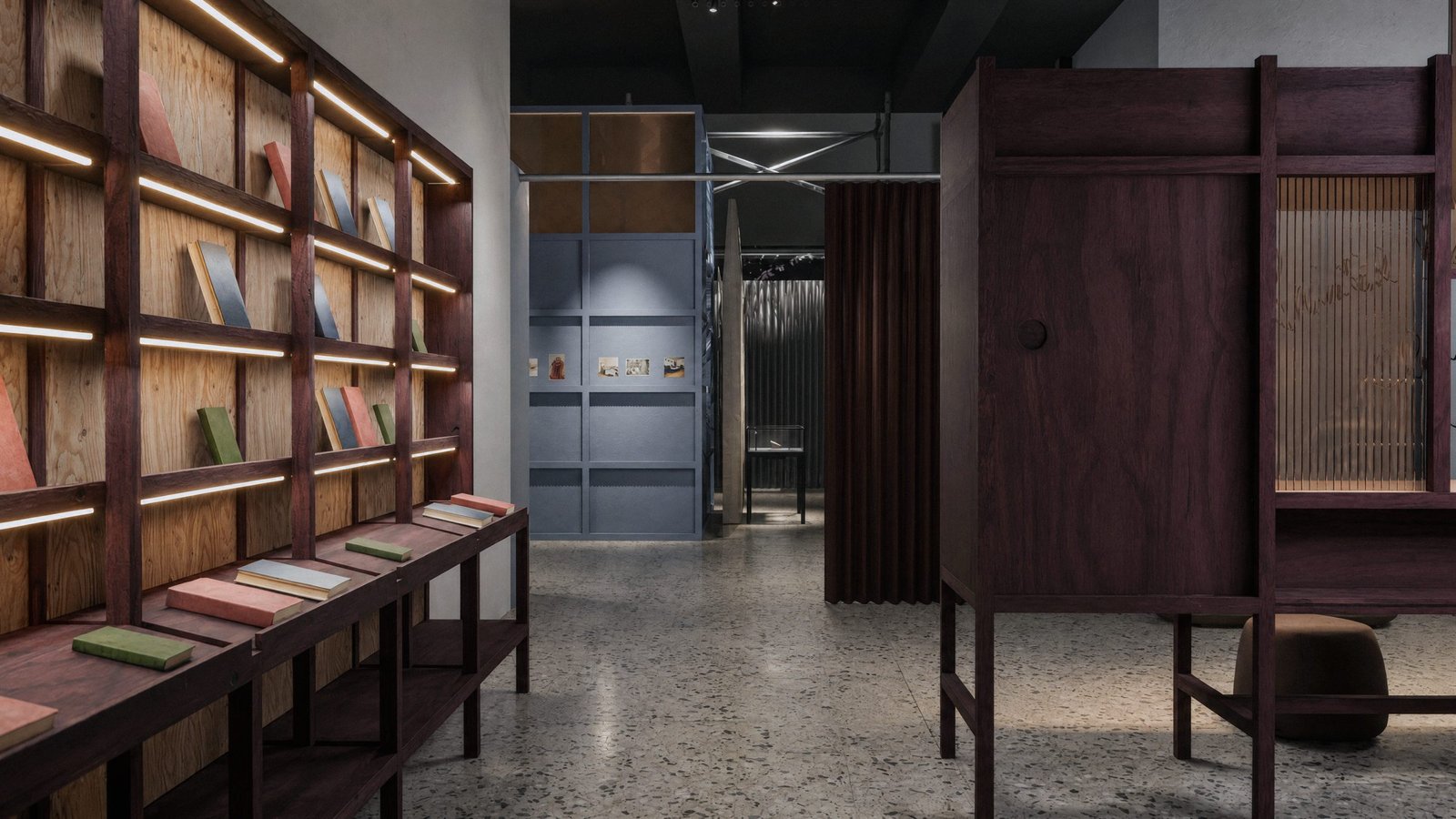
Set apart is the library, a place for individual or shared work and contemplation. Movable plexiglass screens let visitors reshape its modular space freely.

The library — a place for work and contemplation
Library shelves

2

The Eyes of Poland

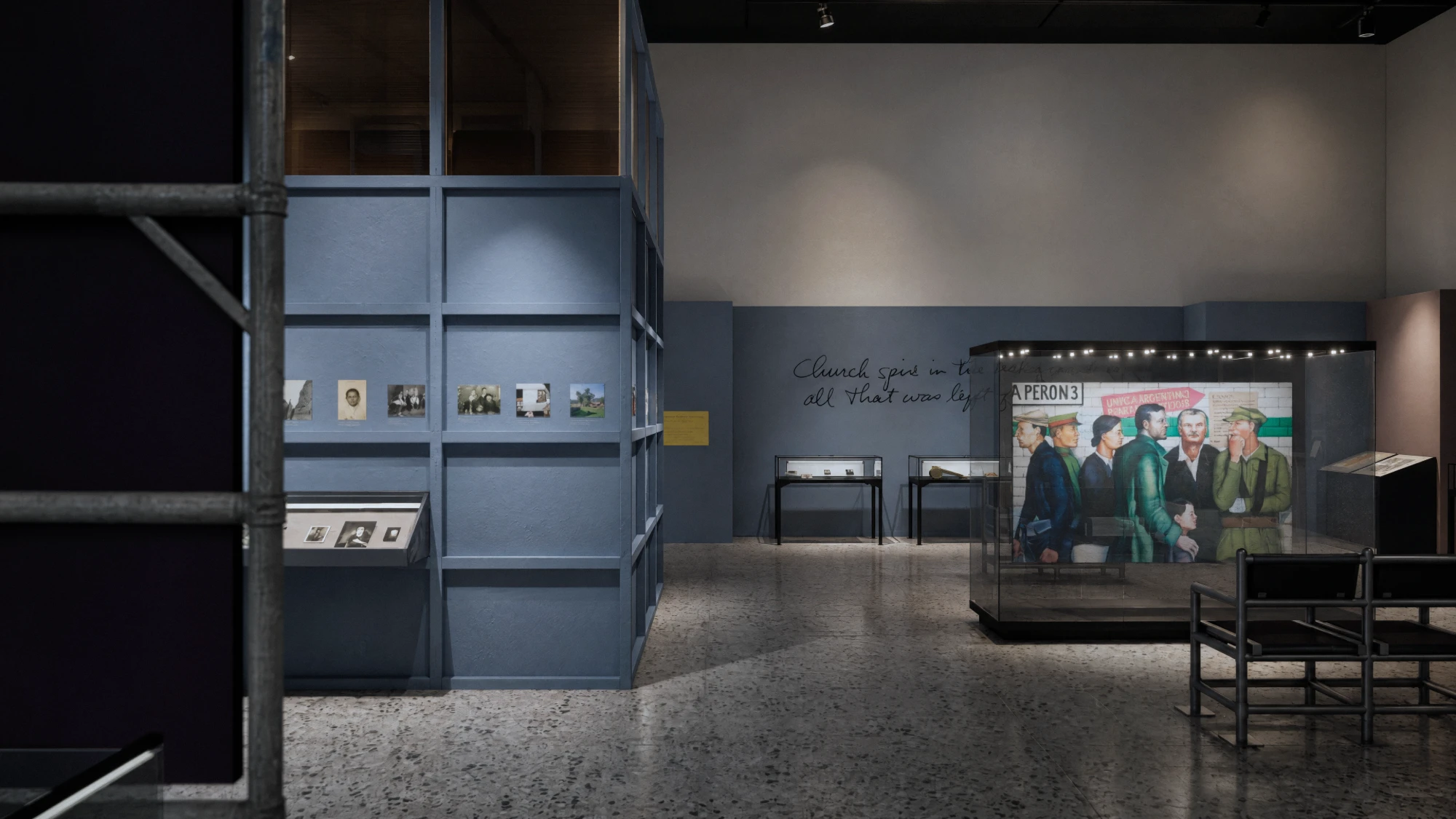
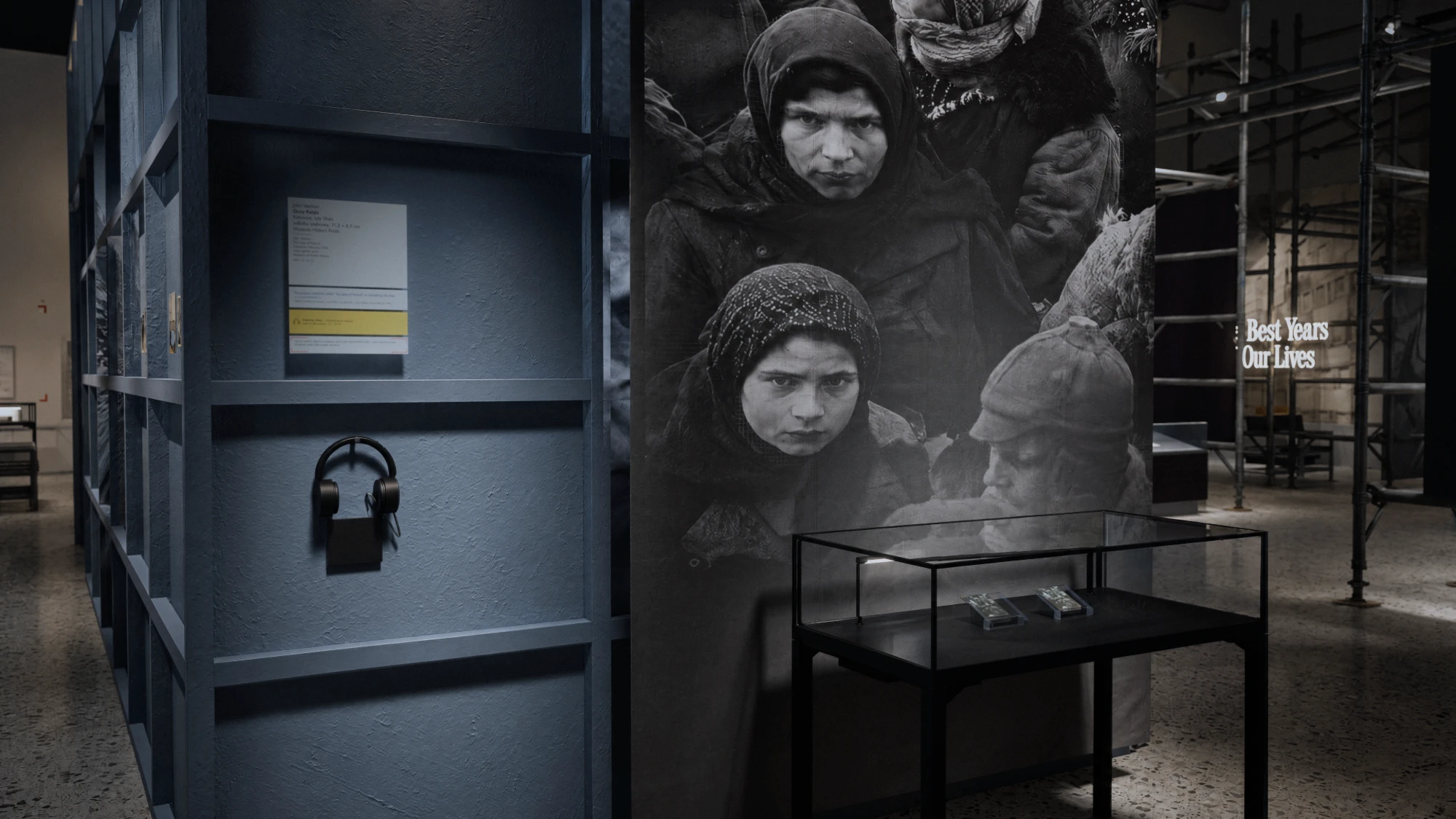
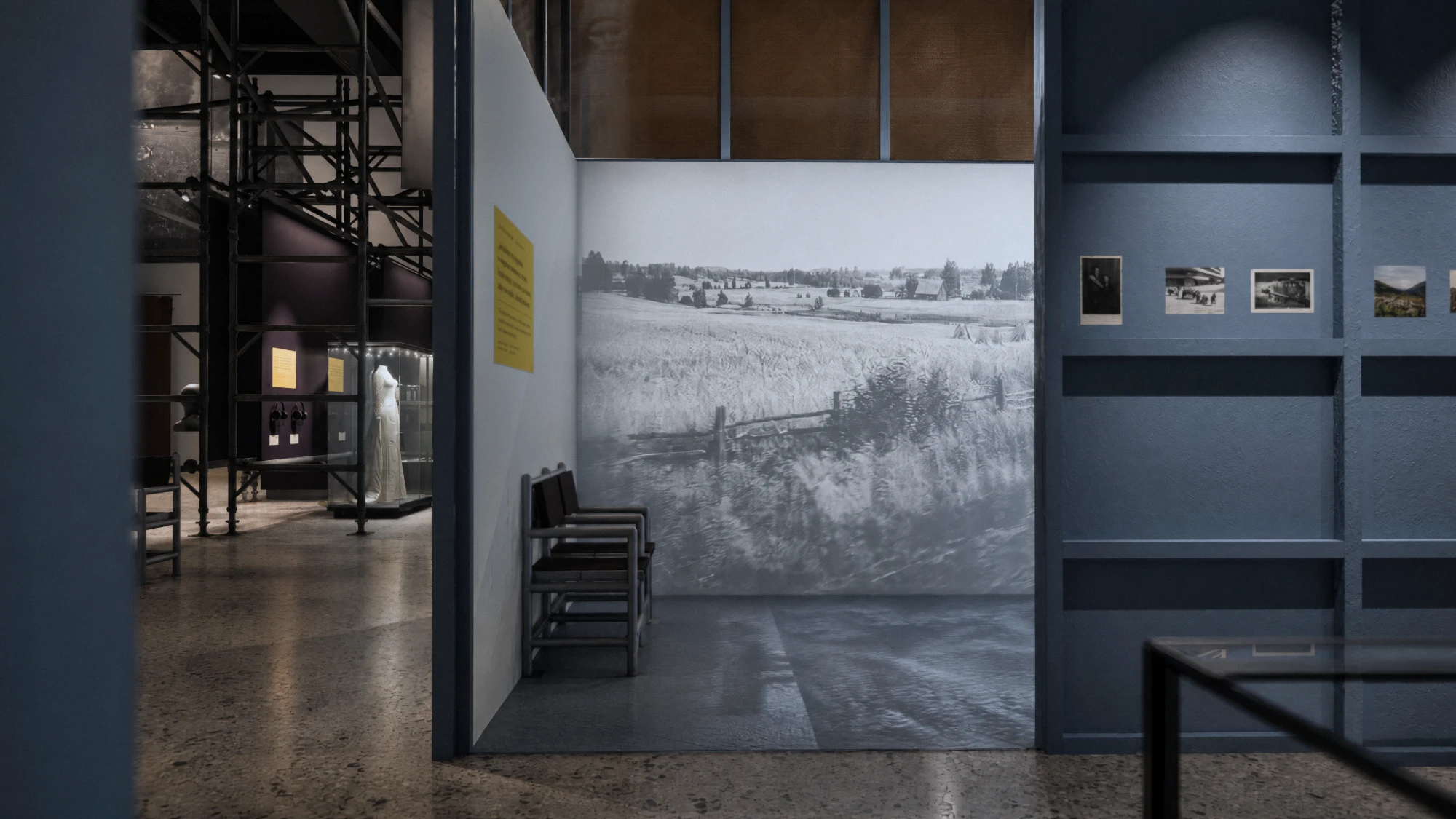
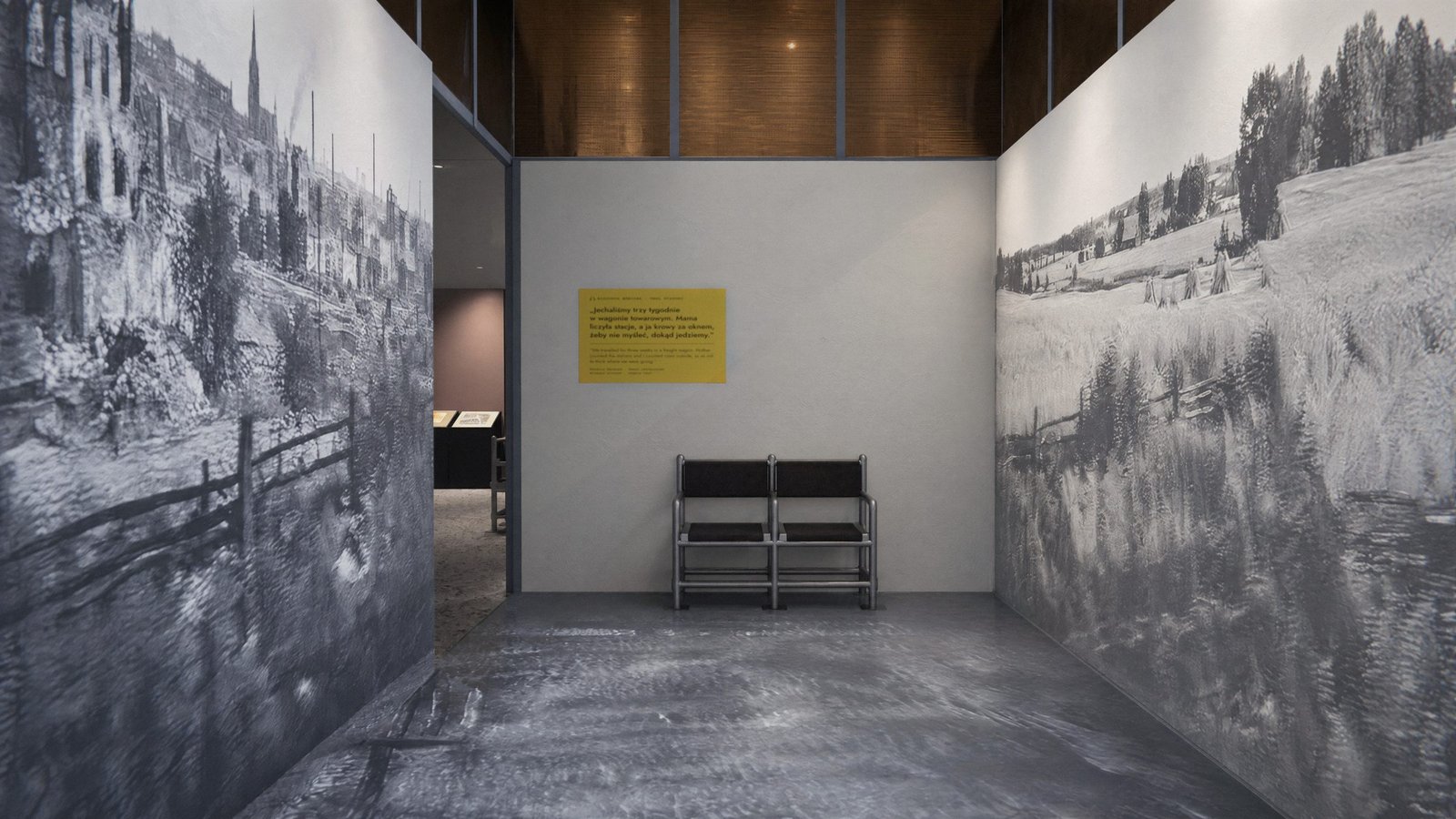
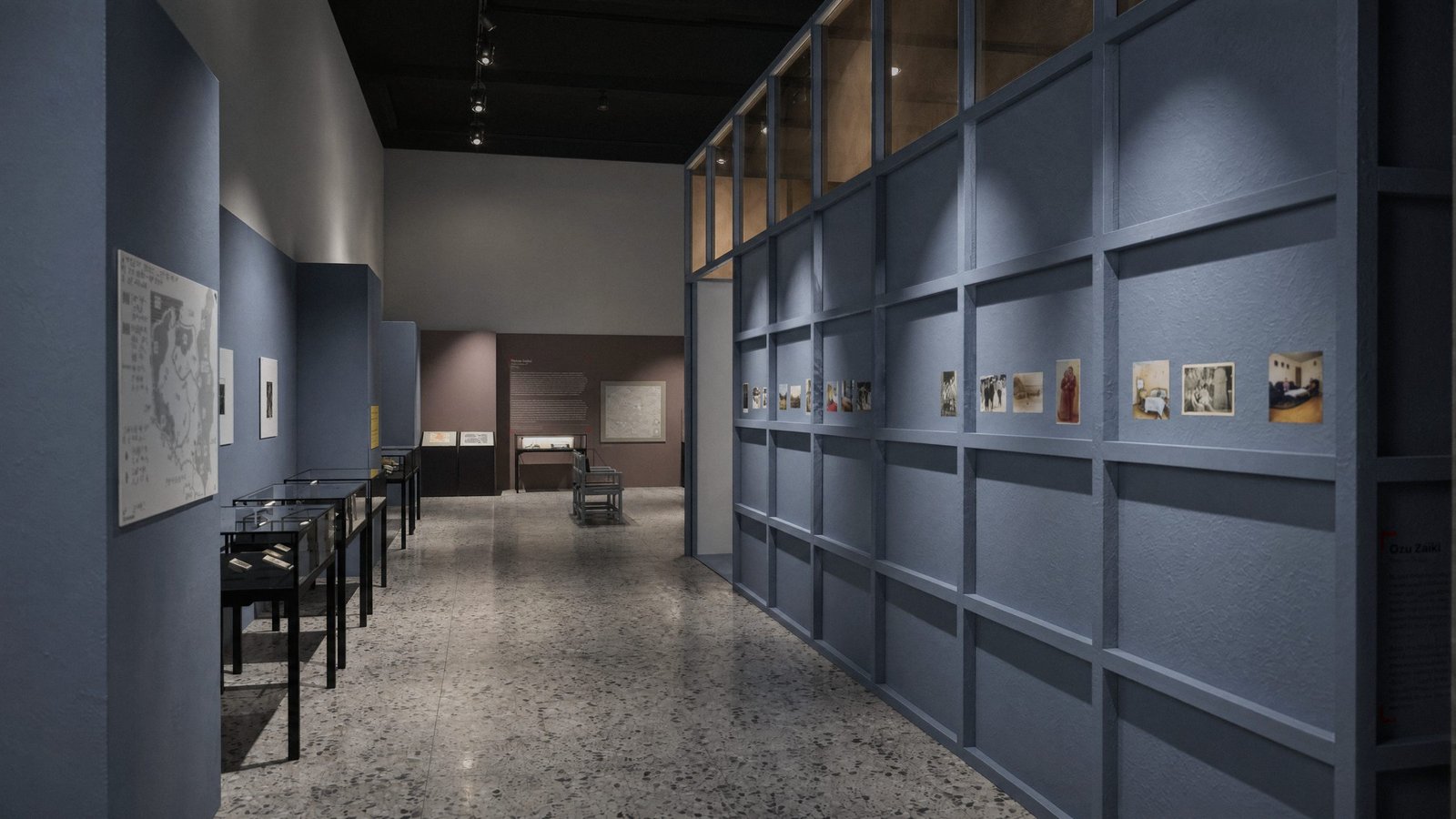
At the heart of “The Eyes of Poland” is an immersive multimedia installation that recreates a train journey through a changing landscape. It invites the wonder at the variety of nature that Vachon felt, and gives the exhibition the momentum needed to understand the migrations of the 1940s. The layout builds a sense of community between today’s visitors and the people in the photographs. Here visitors can also stop by Andrzej Wróblewski’s “Double Painting”, a work that prompts reflection on the many sides of human fate, caught between the political and the private.

The Eyes of Poland — the module, photographs of repatriates and a mural in a showcase
The large-format photograph “the eyes of Poland”, a listening station and a showcase
The multimedia carriage — a landscape projection

3

Liquid War

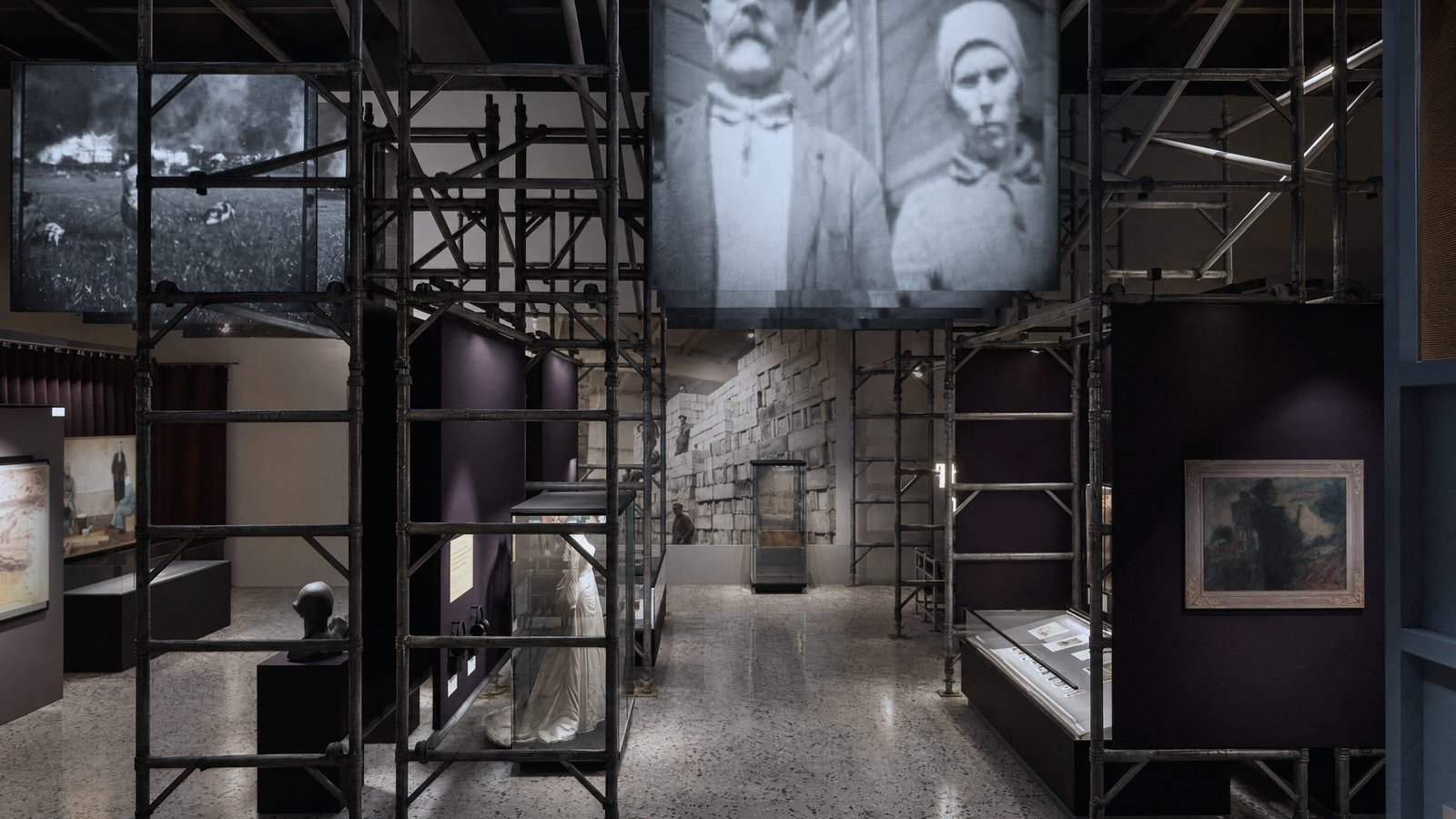
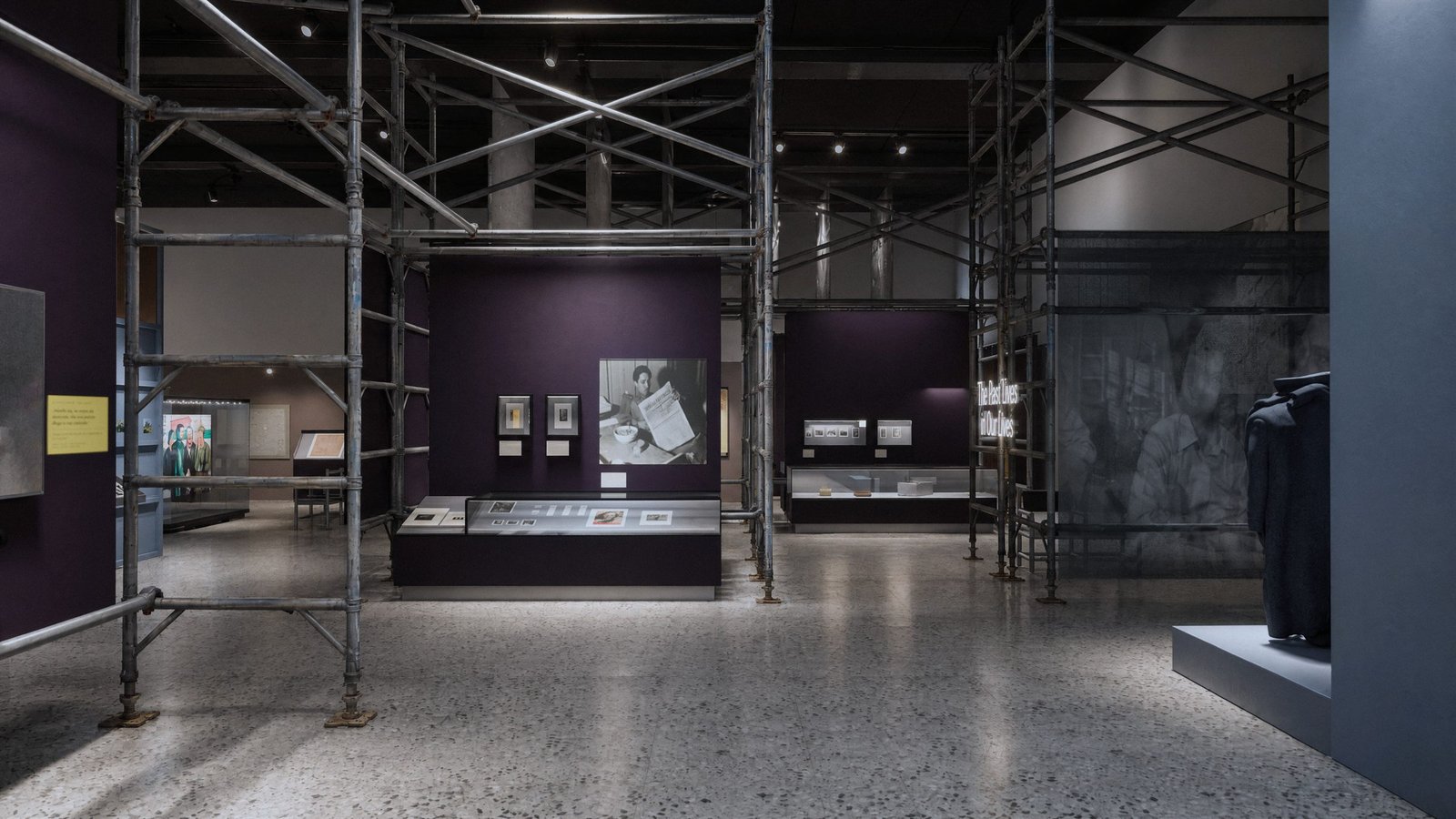
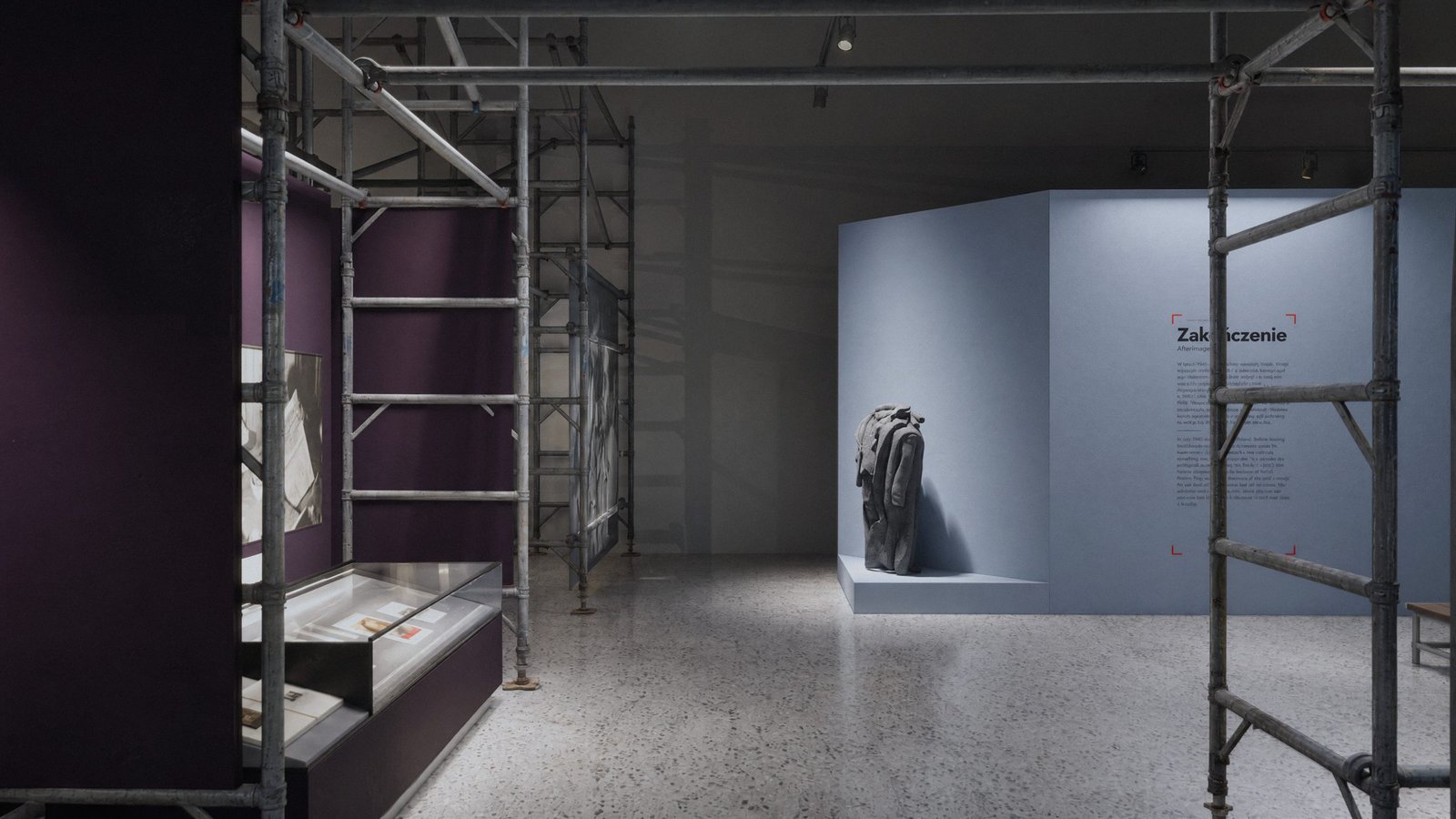
In “Liquid War” the scaffolding, already present in the earlier rooms, fully takes the stage. It combines a structural role with the imagery and symbolism of reconstruction. The dense, open structure forms a maze in which visitors, discovering one object and thread after another, may themselves feel like strangers.

Scaffolding and large-format photographs in Liquid War
A maze of scaffolding
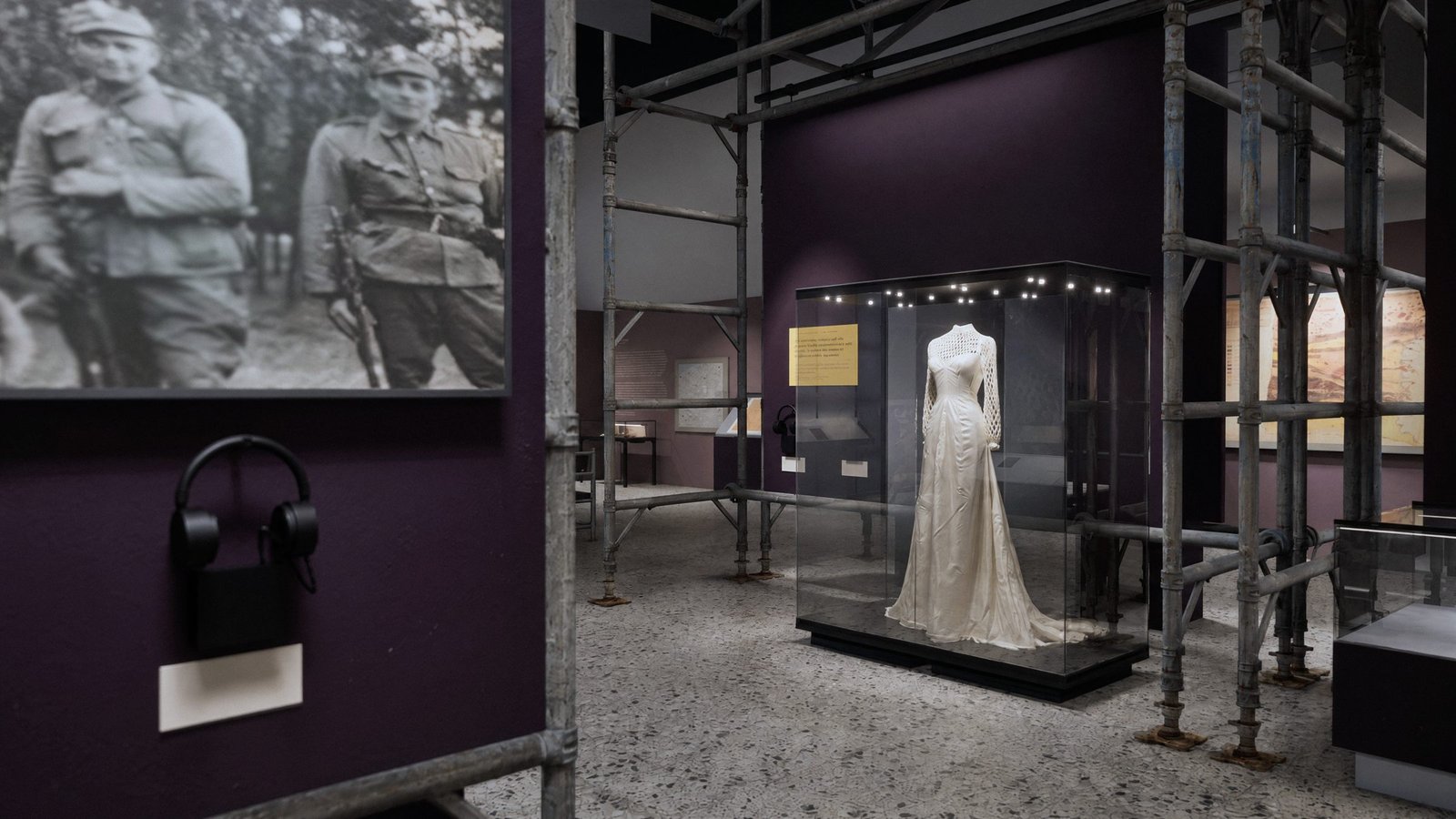
Exhibits among the scaffolding

4

Ending

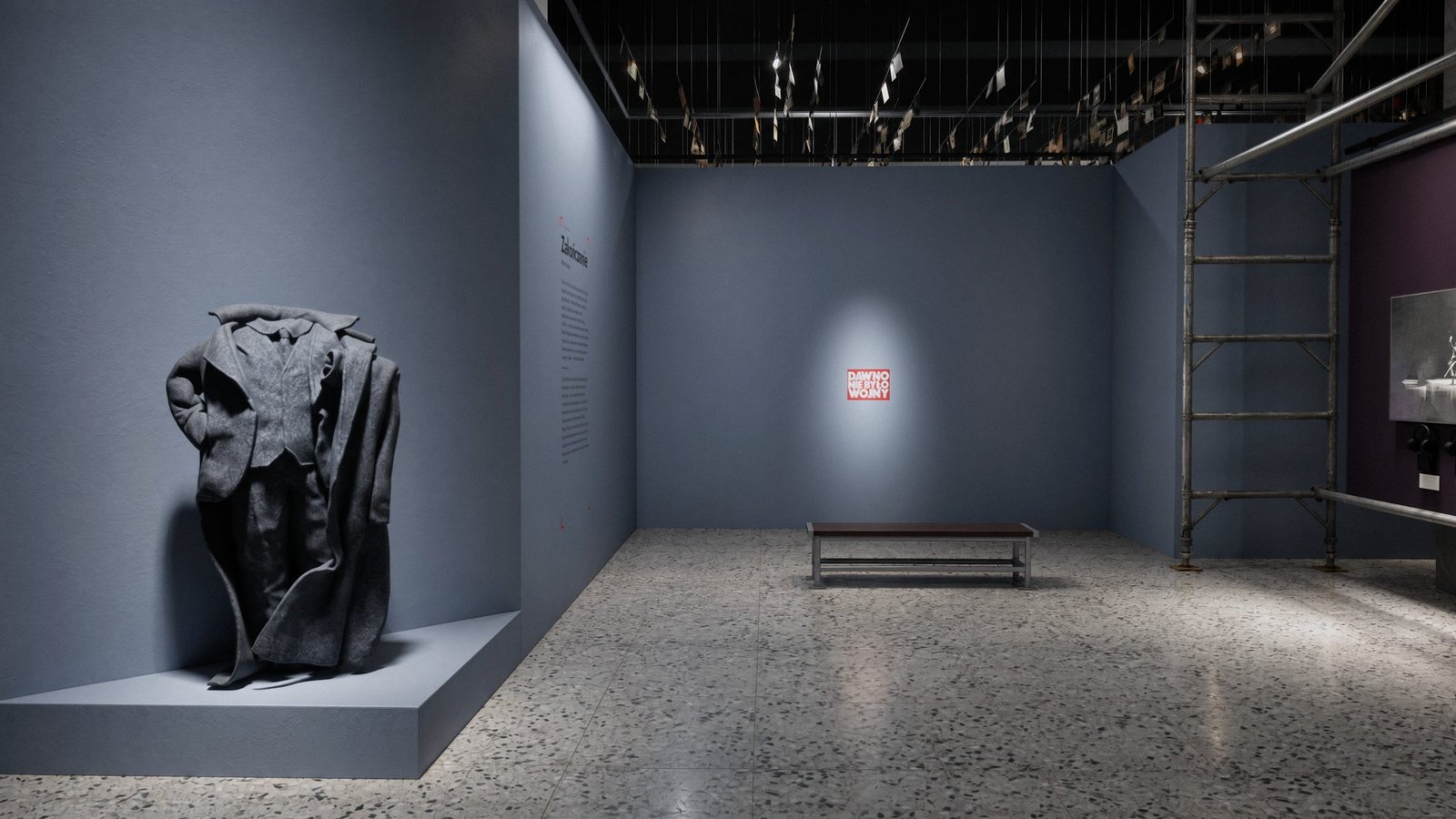
The last room is a contemporary comment on the fears of a fast-changing geopolitical situation, a more brutal world and the war in Ukraine. At its centre is the painting “There Hasn’t Been a War for a Long Time”, shown sparingly on a large, empty wall.

The last room — a large, empty wall

Visual identity

01 / 04

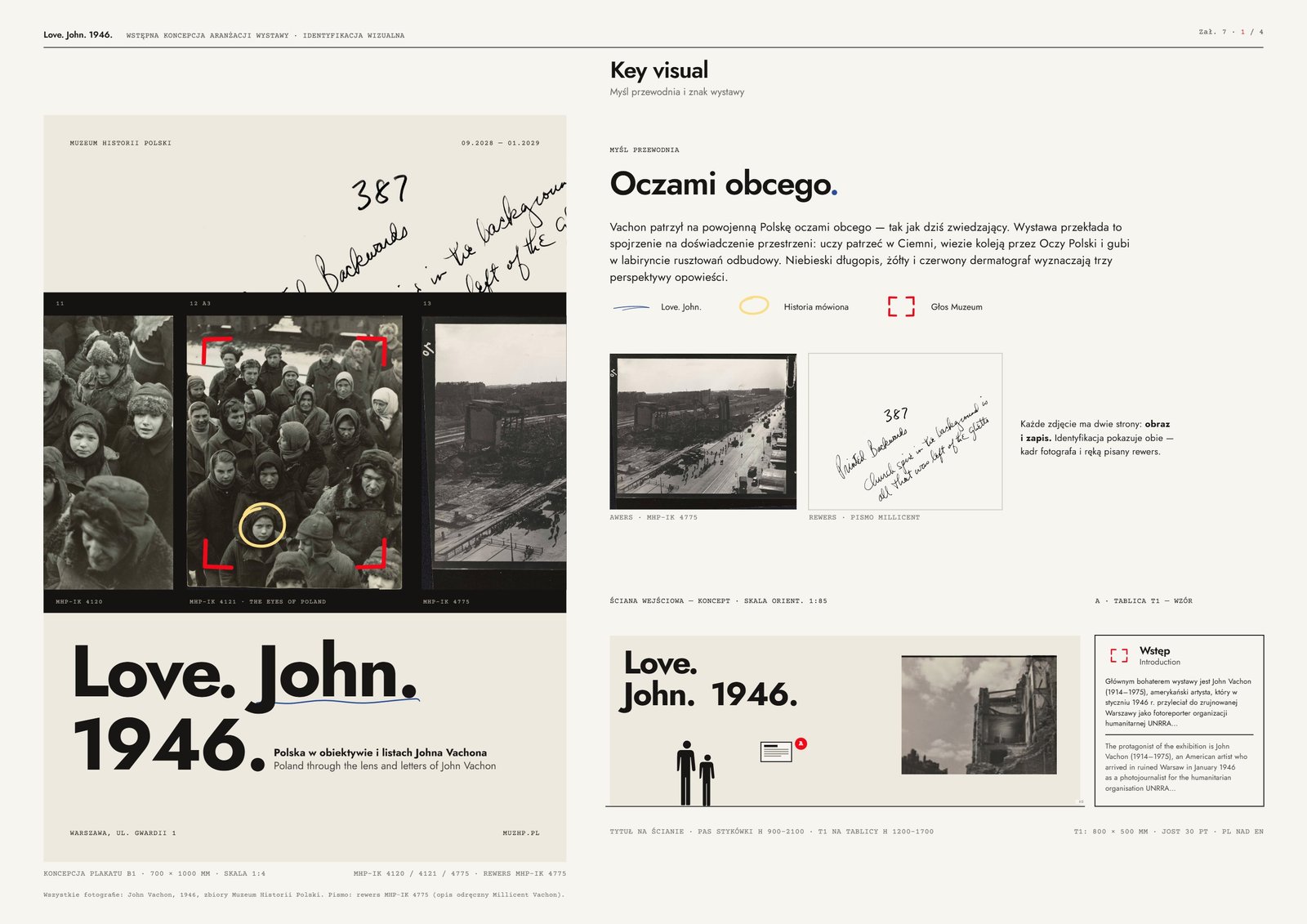
Visual identity — key visual — the poster and the “through a stranger’s eyes” rule
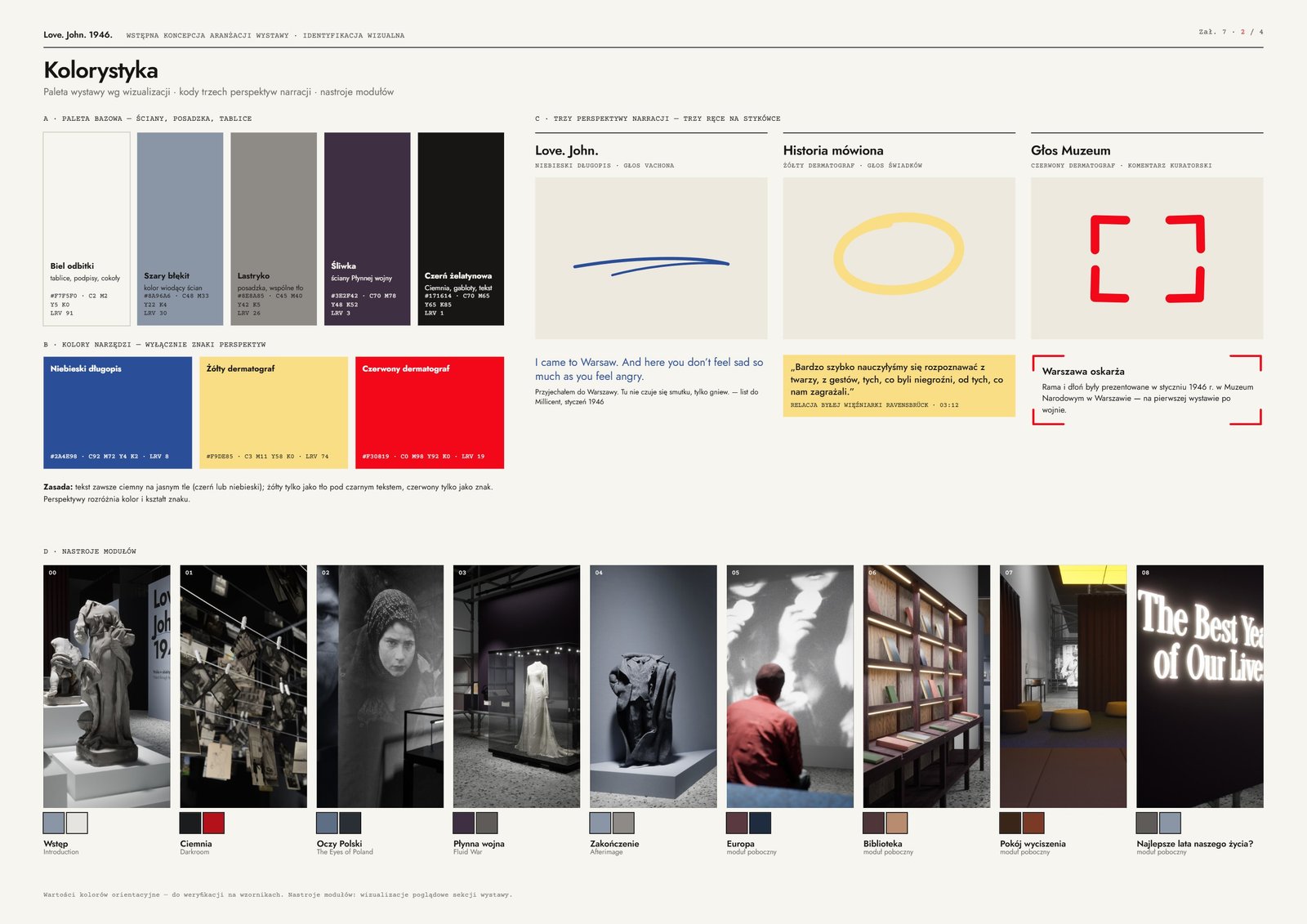
Visual identity — colours and the three narrative voices
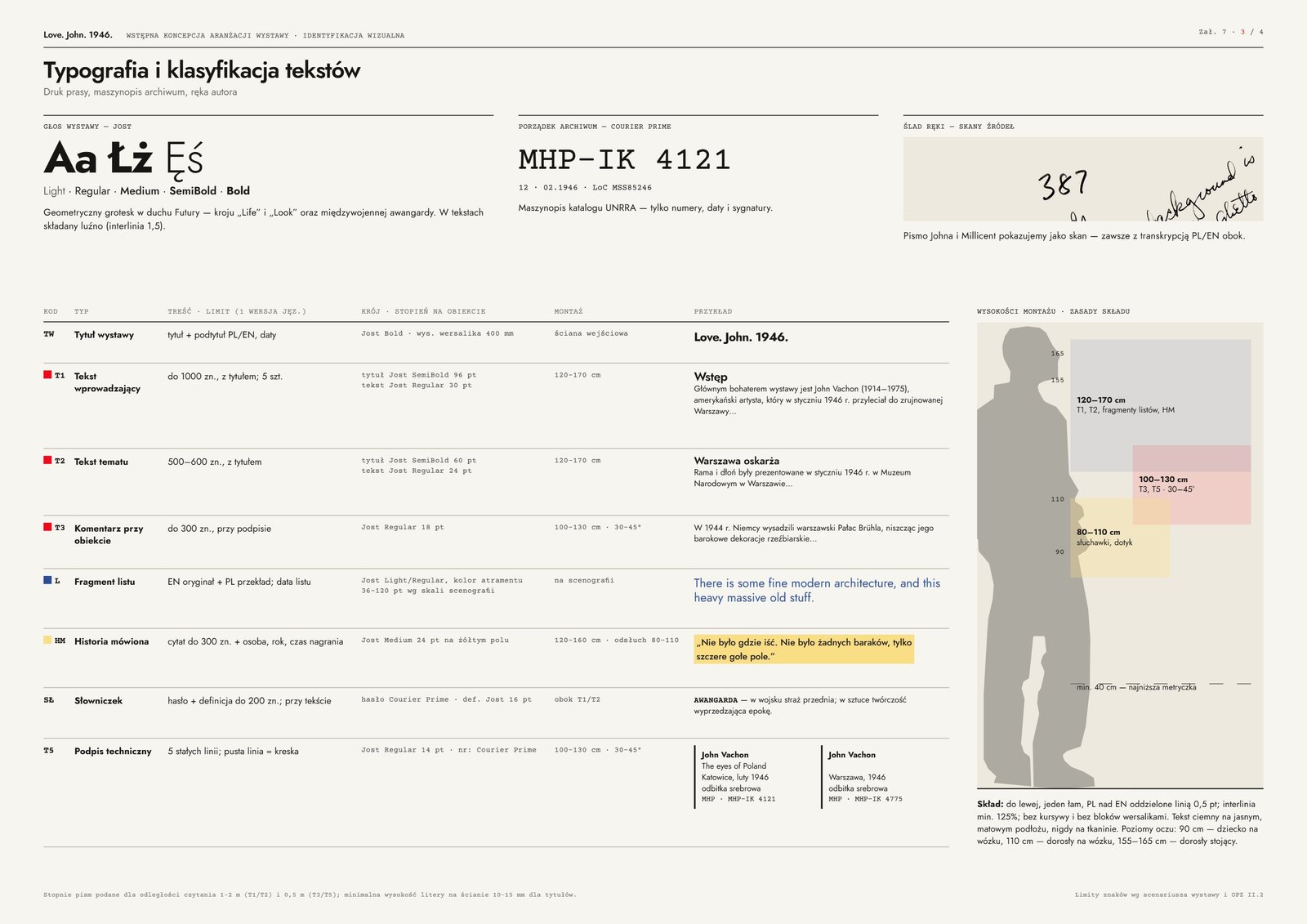
Visual identity — typography and text hierarchy
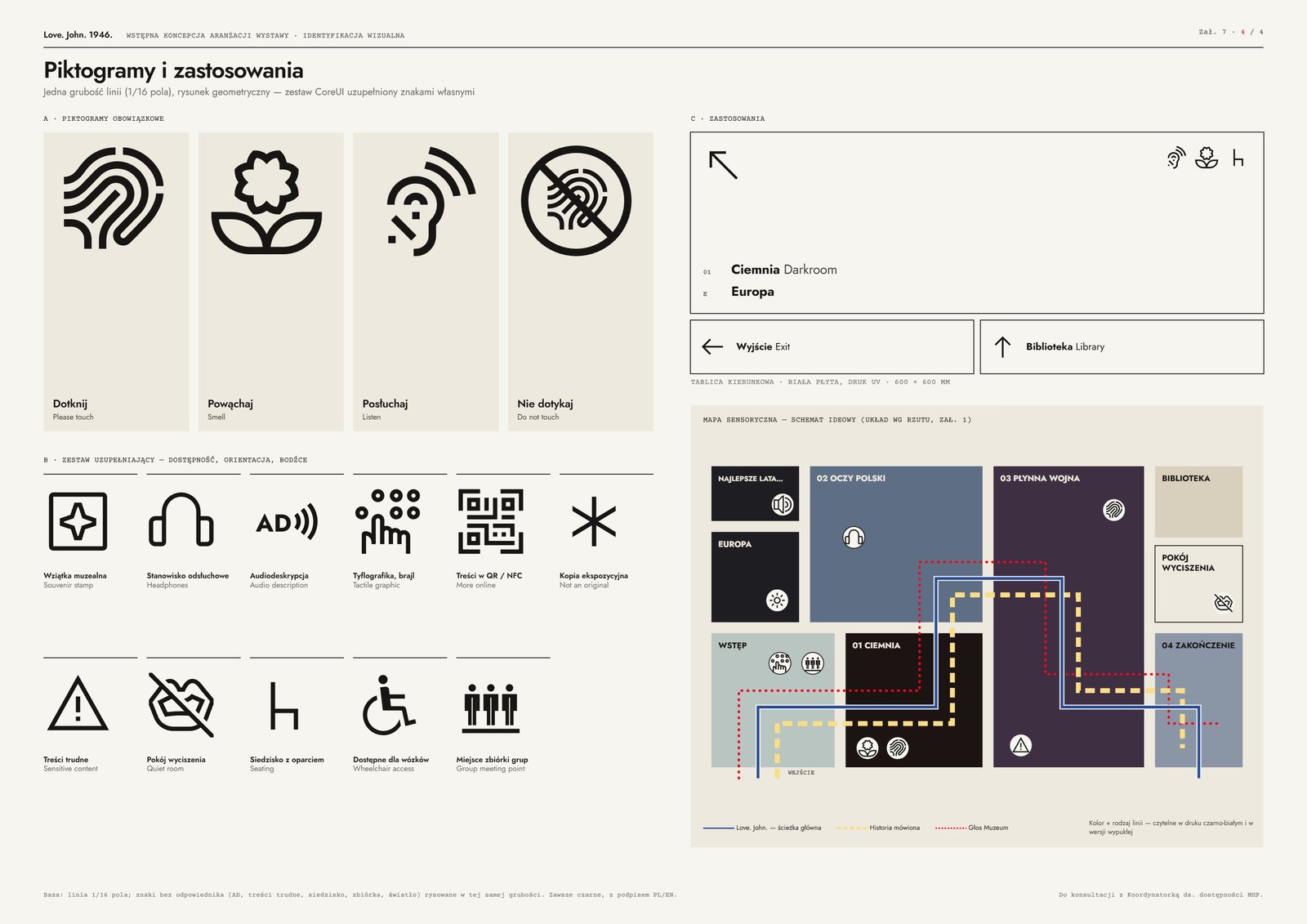
Visual identity — pictograms and applications

Visualisations

Sculptures in the entrance zoneThe entrance zone with sculpturesLarge-format landscape photographsA showcase with the “Europe” brochure at the entrance to the projection zone
Introduction — the exhibition title and a sculptureThe exit from the last roomA label by the large-format iconographyA showcase with Vachon’s handwritten note in the Darkroom
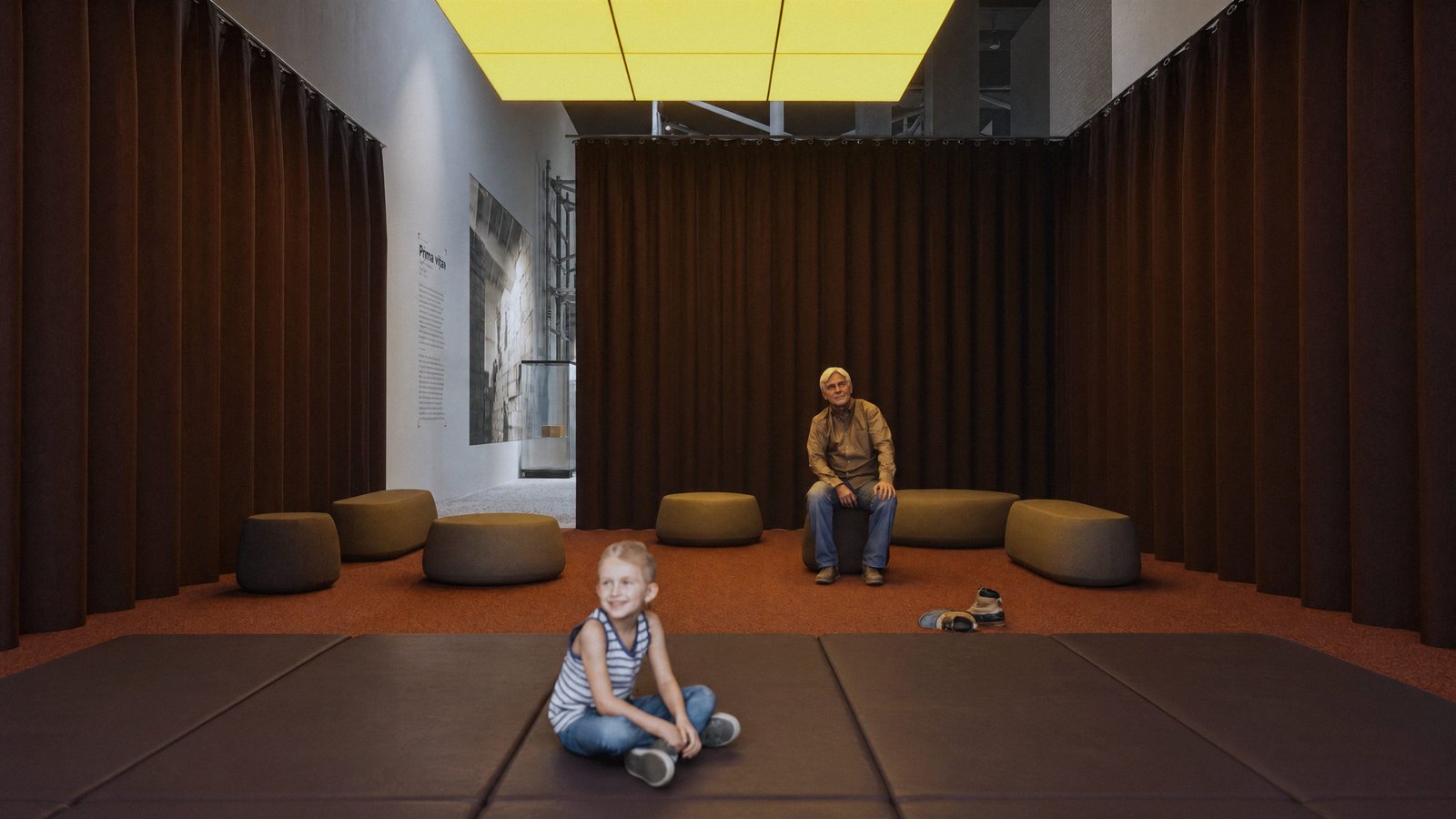
A rest area with projectionThe Eyes of Poland display modulesThe darkened cinema moduleA dress made from a parachute and the entrance to the “The Best Years of Our Lives” screening

Visualisations: rewir.studio, Unreal Engine